
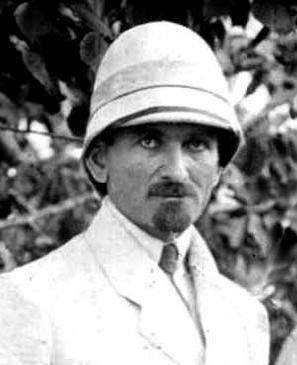
Ashkharbek Loris-Melik Kalantar (Armenian: Աշխարհբեկ Լոռիս-Մելիք Քալանթար; February 11, 1884 – June 1942) was a pioneering Armenian archaeologist, historian, and educator whose excavations, publications, and institutional leadership established scientific archaeology in Armenia, only for his brilliant career to end in Great Purge martyrdom.
Born into Tiflis’ noble Loris-Melikov and Arghutian families, Kalantar graduated St. Petersburg University in 1911 under Nicholas Marr, joining the Archaeological Institute, Imperial Russian Archaeological Society, and Asiatic Museum as curator. World War I service as General Andranik’s translator on the Caucasus Front fused scholarship with patriotism.
Ani Excavations: Medieval Capital’s Last Chronicler (1907–1918)
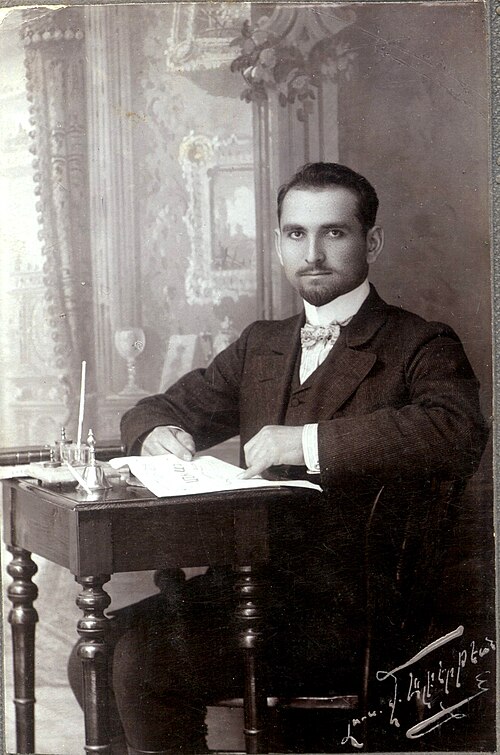
Kalantar’s 1907 student debut joined Marr’s Ani campaigns, unearthing the Armenian medieval capital’s churches, walls, palaces. Appointed 1914 expedition head (13th campaign), he meticulously documented monasteries, frescoes, inscriptions before Bolshevik-Turkish upheavals. In 1918, amid First Republic chaos, he heroically evacuated 6,000 Ani artifacts to Yerevan—now History Museum crown jewels—becoming the final archaeologist to describe monuments obliterated post-1920s by Turkish policies.
Prehistoric Pioneering: Irrigation, Vishaps, Urartu (1910s–1930s)
Kalantar’s 1910s Lori-Surmali surveys revealed ancient irrigation channels, Zor basilica epigraphy, Vanstan (Imirzek) monastery. With Nicholas Adontz’s 1917 Van expedition, he deciphered Urartian cuneiform. Soviet era breakthroughs mapped pre-Urartian aqueducts across Aragats-Geghama ranges, pioneering vishap (dragon-stone) studies—7th-3rd millennia BC petroglyphs symbolizing pastoral cults. First Armenian systematizer of prehistoric rock art, his Urartian inscription corpus remains foundational.
Institutional Architect: Yerevan State University and Heritage Commission
Kalantar co-founded Yerevan State University (1919) as one of seven original members, establishing the Chair of Archaeology and Oriental Studies (1922)—Armenia’s first, with inaugural textbook. Alongside Alexander Tamanian and Martiros Saryan, he launched the Commission of Ancient Monuments (1920s), organizing 30+ expeditions (1920–1938). 1931 Old Vagharshapat digs illuminated Etchmiadzin origins; 1930s with Tamanian, he vainly defended Yerevan’s Katoghike and Poghos-Petros basilicas from Soviet demolition.
Appointed Armenian Soviet Academy of Sciences council member (1935), Kalantar authored 80+ articles, embodying transitional scholarship from tsarist orientalism to Soviet science.
Great Purge Martyrdom (1938–1942)
Stalinist terror shattered Kalantar’s zenith: arrested March 1938 as “enemy of the people,” branded Andranik soldier (defiantly affirmed at trial). Executed June 1942; posthumously rehabilitated 1955. American Journal of Archaeology (1996) credits him over Lehmann-Haupt, Marr as Armenian highlands archaeology’s true architect.
Monumental Legacy
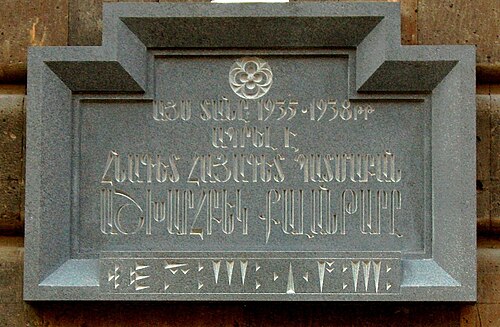
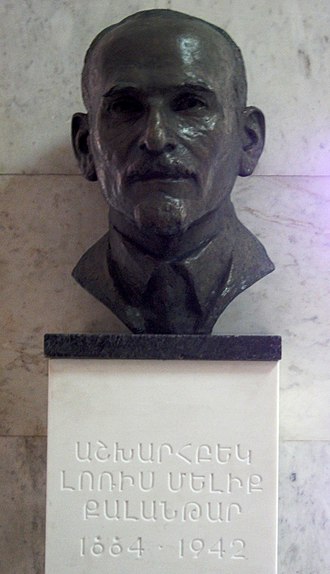
February 2015 Yerevan State University bust—crafted by Anna Hekekyan—enshrines Kalantar beside Tamanian, Saryan. YSU Dean Edik Minasyan hailed patriot-scientist whose Ani evacuation, vishap studies, university chair birthed Armenian archaeology amid existential threats.
Pioneering Milestones:
- 1914: Ani expedition leader, artifact savior.
- 1922: Archaeology chair founder, textbook author.
- 1920s–1930s: 30 expeditions, pre-Urartian irrigation proof.
- First prehistoric petroglyph systematizer.
- Heritage Commission co-founder.
Enduring Canon: Kalantar’s vanished Ani descriptions preserve lost medieval glory; Geghama vishaps testify pastoral genius; YSU chair educates generations. From Loris-Melik scion to Purge victim, he forged Armenia’s archaeological spine—Andranik’s soldier-scholar defending past against oblivion.
From Kalantar’s documents
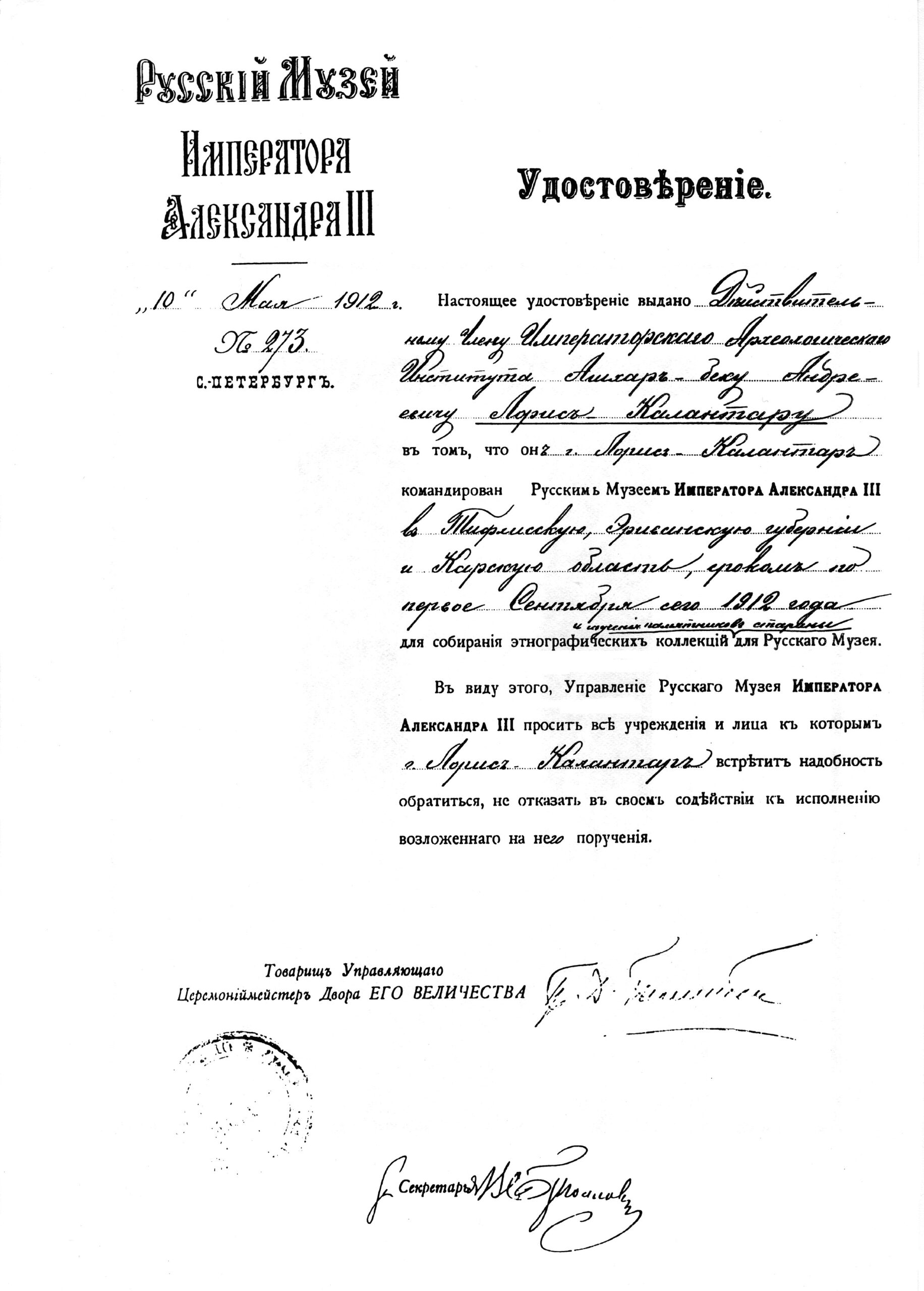
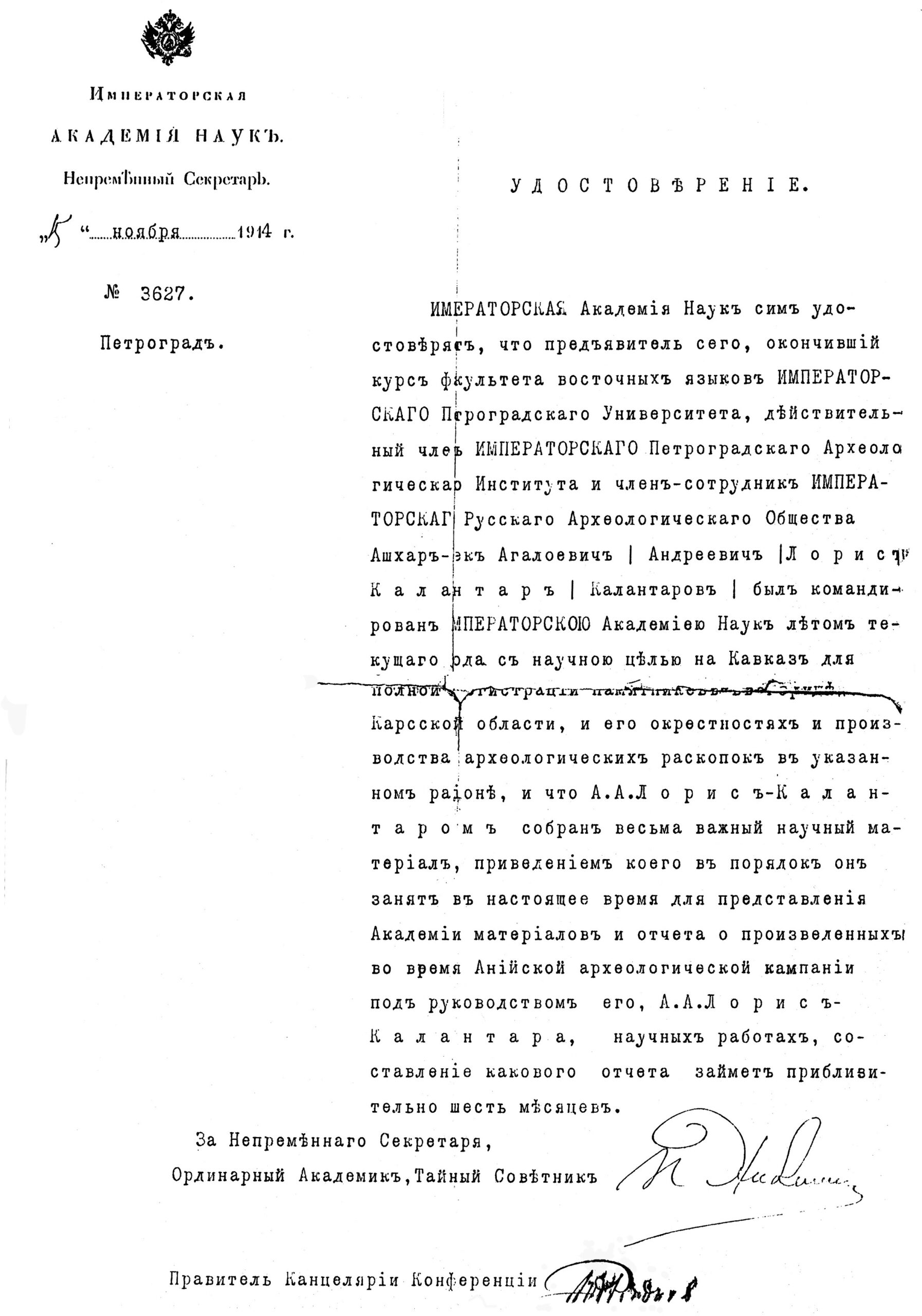
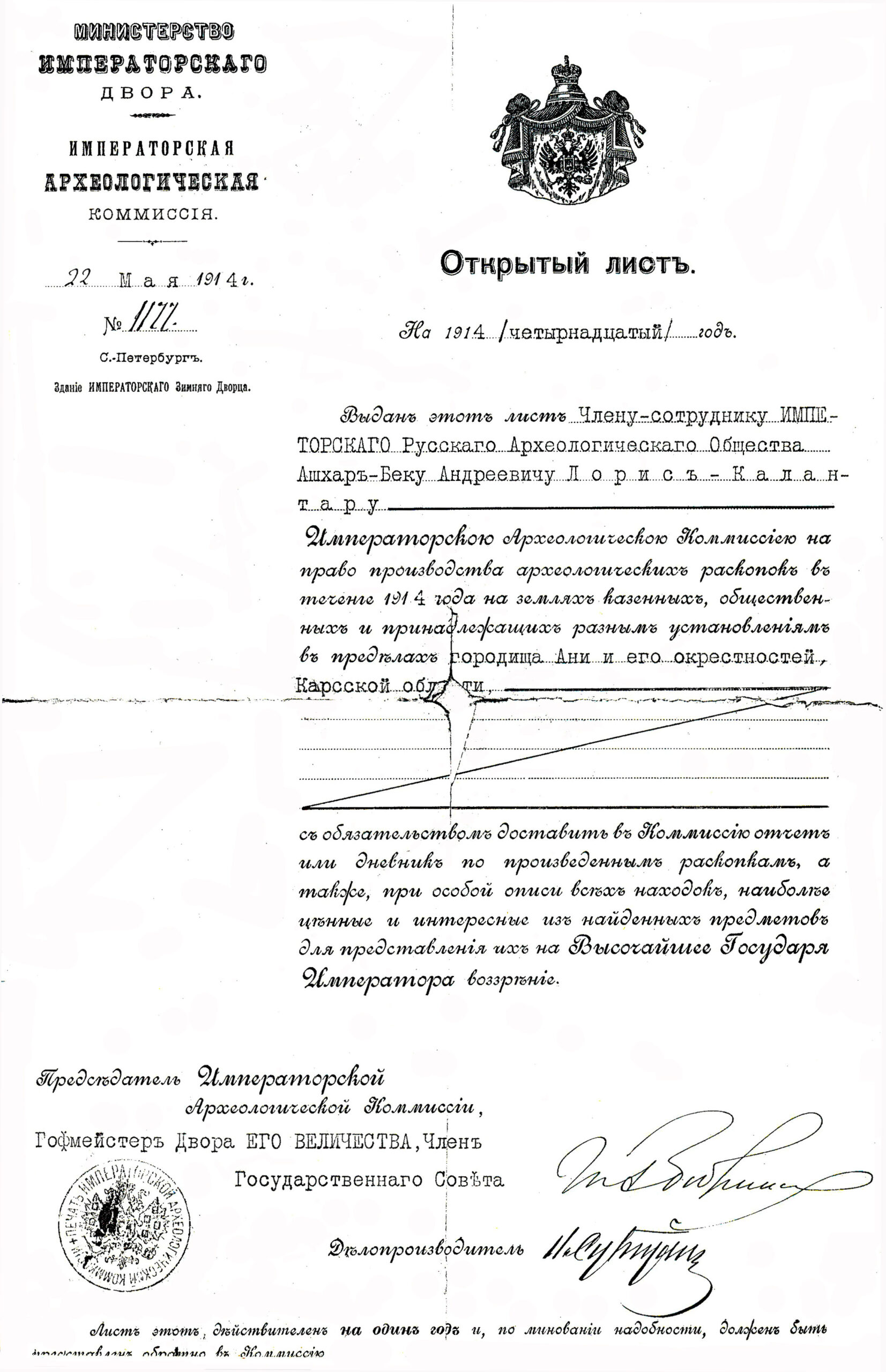
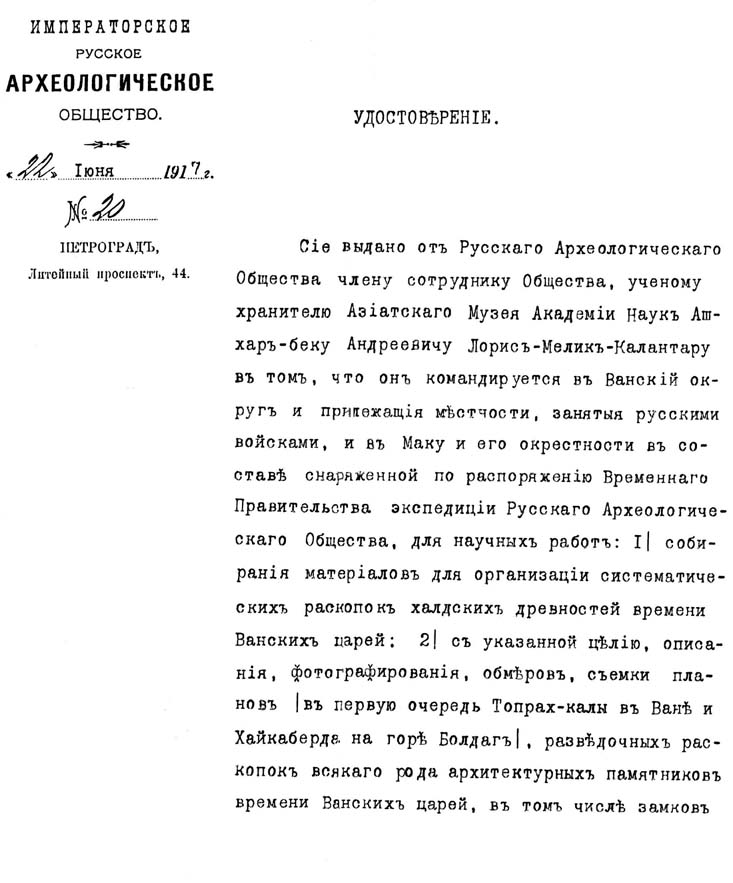

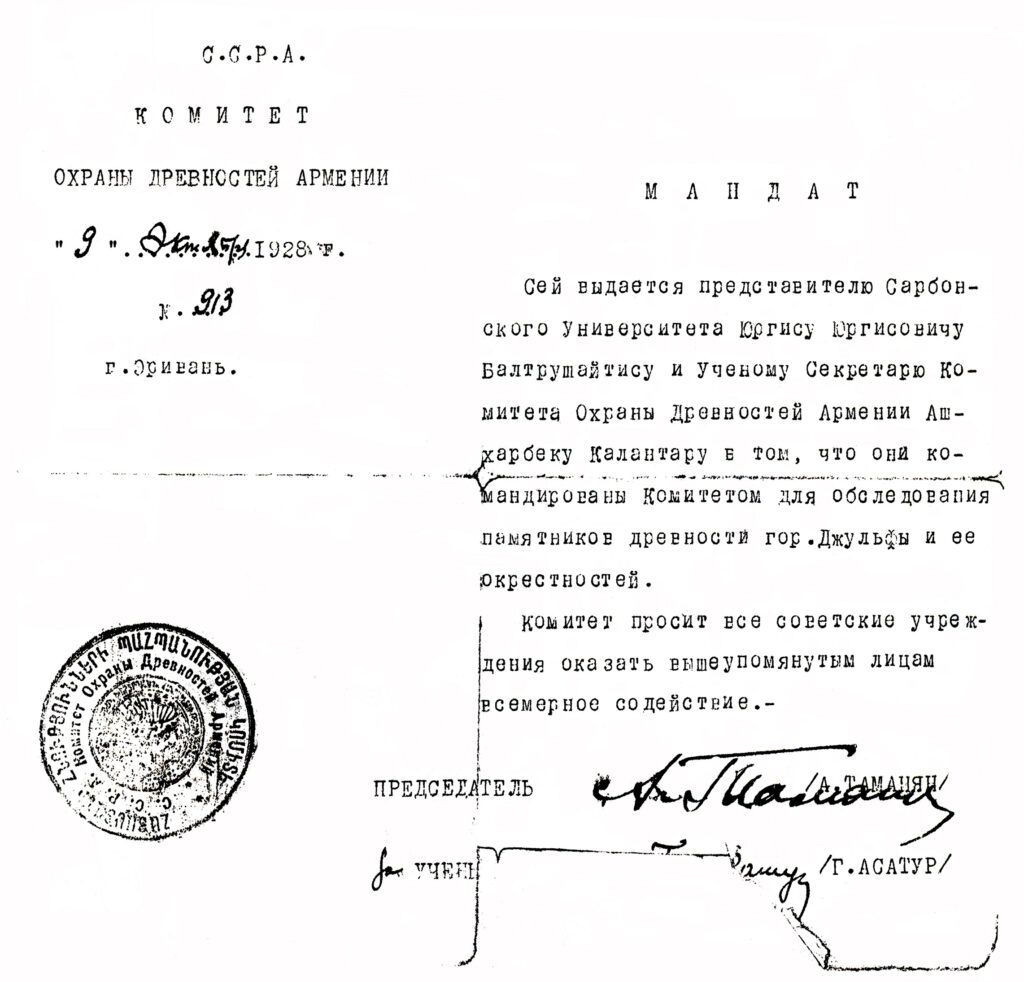
Photos: en.wikipedia.org/wiki/Ashkharbek_Kalantar