
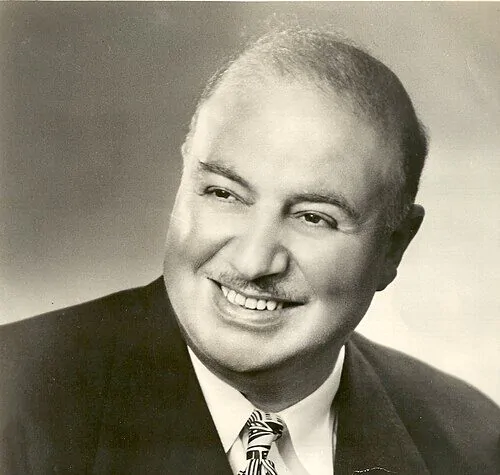
George Magar Mardikian (Armenian: Ջորջ Մարտիկյան; November 7, 1903 – October 23, 1977) was a Turkish-born American restaurateur, chef, author, and philanthropist of Armenian heritage. In 1938, he opened Omar Khayyam’s restaurant in San Francisco, California, which thrived for over 40 years. Mardikian played a pivotal role in popularizing Armenian cuisine in the United States. He founded the American National Committee to Aid Homeless Armenians (ANCHA), and his uncle was the legendary Armenian revolutionary Krikor Amirian.
Early Life, Family, and Formative Trauma
Born in Bayburt within the Ottoman Empire (now Turkey) to Magar Mardikian and Haiganoush Amirian, Mardikian grew up in Constantinople’s Scutari Armenian quarter. His paternal Mardikian line traced to warriors the name itself meaning “warrior” in Armenian while his maternal Amirians wielded influence in Bayburt. Haiganoush, elder sister to idol Krikor Amirian, shaped his fierce spirit. Nicknamed “shisko” (Turkish for “chubby”) in childhood, young George shed boyhood softness amid catastrophe.
On April 24, 1915 Red Sunday Ottoman authorities arrested his father among 250 Armenian intellectuals. The Amirians faced expulsion to Erzincan: grandmother Vartanoush leaped into the Euphrates, others beaten or burned alive. Witnessing maternal massacre, Mardikian vowed vengeance, fleeing at 11 to join Armenian volunteer units under uncle Krikor. Post-World War I, recaptured and imprisoned in a sauerkraut factory chopping useless ice under Turkish lashes he endured two years until Near East Relief’s George D. White secured release by claiming American citizenship. Reunited briefly with mother Haiganoush and uncle Krikor, they urged flight to America like sister Baidzar. Turkish police raided hours after his Scutari ship sailed; Haiganoush feigned his death.
Early Life, Family, and Formative Trauma
Born in Bayburt within the Ottoman Empire (now Turkey) to Magar Mardikian and Haiganoush Amirian, Mardikian grew up in Constantinople’s Scutari Armenian quarter. His paternal Mardikian line traced to warriors—the name itself meaning “warrior” in Armenian—while his maternal Amirians wielded influence in Bayburt. Haiganoush, elder sister to idol Krikor Amirian, shaped his fierce spirit. Nicknamed “shisko” (Turkish for “chubby”) in childhood, young George shed boyhood softness amid catastrophe.
On April 24, 1915 Red Sunday Ottoman authorities arrested his father among 250 Armenian intellectuals. The Amirians faced expulsion to Erzincan: grandmother Vartanoush leaped into the Euphrates, others beaten or burned alive. Witnessing maternal massacre, Mardikian vowed vengeance, fleeing at 11 to join Armenian volunteer units under uncle Krikor. Post-World War I, recaptured and imprisoned in a sauerkraut factory—chopping useless ice under Turkish lashes—he endured two years until Near East Relief’s George D. White secured release by claiming American citizenship. Reunited briefly with mother Haiganoush and uncle Krikor, they urged flight to America like sister Baidzar. Turkish police raided hours after his Scutari ship sailed; Haiganoush feigned his death.
Arrival and Rebirth in America
Landing at Ellis Island on July 24, 1922 adopted “birthday” Mardikian shed Old World scars in the shower: “I washed away the grime… all the hatred and injustice… reborn an American.” Train-bound to San Francisco, potato salad sustained his English-only reading. Dishwashing at Coffee Dan’s and Clinton’s Cafeteria led to management under Eugene Compton. Naturalized 1928, he circled the globe as cruise steward, absorbing Marseille fish stews, Bombay spices, Tokyo techniques—fueling Armenian fusion dreams.
Omar Khayyam’s Culinary Empire
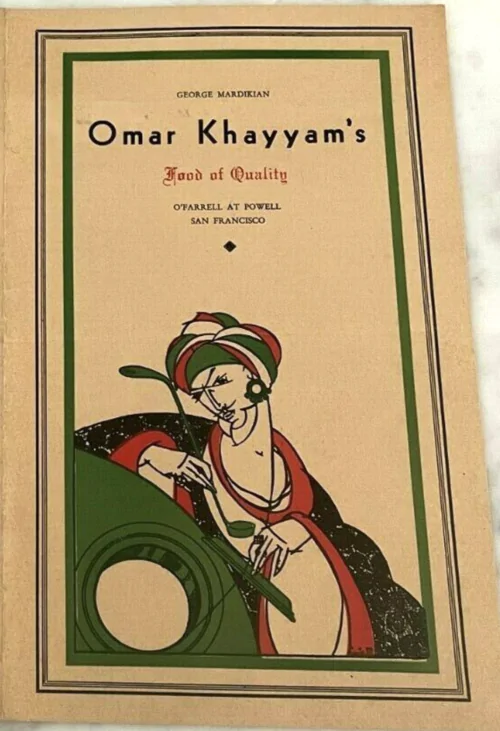
In 1930 Fresno, with wife Nazenig, Mardikian launched lunch counter Omar Khayyam’s Persian poet homage defying Depression with clam chowder, chili, pot roast. Expanding to larger Fresno sites, the 1938 San Francisco flagship (Powell/O’Farrell, ex-Coffee Dan’s) drew critics and crowds. Cavernous below street level, Rubaiyat Lounge glowed with Persian lamps; curtained chambers evoked Arabian Nights, walls inscribed with Omar Khayyam quatrains. Mardikian broke signature flatbread with diners, hawking yogurt health and folk tales alongside shish kebab, pilaf, dolma, spinach boregs. A 1980 fire claimed it.
| Restaurant Milestones | Location | Year | Signature Dishes |
|---|---|---|---|
| Fresno Original | Fresno, CA | 1930 | Chowder, pot roast |
| San Francisco Flagship | 200 Powell St. | 1938 | Shish kebab, boregs |
| Chain Expansion | California | 1930s–70s | Pilaf, yogurt |
World War II and Global Impact
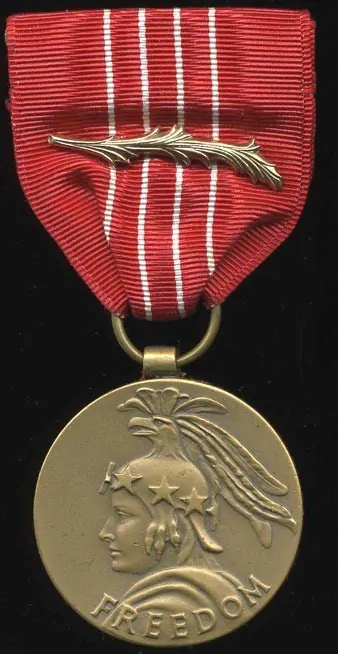
From 1942–1954, Mardikian consulted U.S. Army Quartermaster General—”Champion of G.I. Chow”—upgrading C-rations with meatball stews, fruit bars. Reader’s Digest crowned him; Truman awarded 1951 Medal of Freedom: “vigorous energy… enlisted commanders and soldiers alike.” He catered 1945 San Francisco UN Conference, feeding charter framers pilaf diplomacy. Cookbook Dinner at Omar Khayyam’s (1944) reprinted decades; 1956 Song of America—Hoover-prefaced—etched immigrant epic, excerpted at Epcot’s American Adventure.
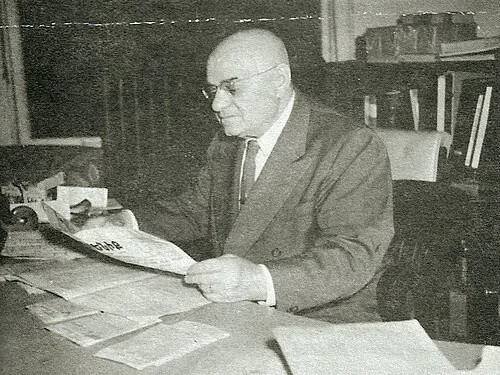
Postwar, ANCHA resettled 5,000 Armenians; he located uncle Krikor in 1945, spiriting family from Austria to Italy for emotional reunion. Krikor became chief typist, Soghomon Tehlirian assistant. Lifelong Boy Scout (61 years, founded 1920 Armenian unit), Mardikian backed Republicans; This Is Your Life (1954) spotlighted his saga.
Omar Khayyam’s restaurant
George Mardikian’s Omar Khayyam’s nestled in the basement of 200 Powell Street, San Francisco, at the Powell-O’Farrell corner, with its entrance discreetly off O’Farrell Street. Guests first encountered a wall of photographs showing Mardikian sharing his signature flatbread with celebrities like Dwight Eisenhower and Eleanor Roosevelt, priming them for the luxurious descent into the vast, elaborately adorned space below.
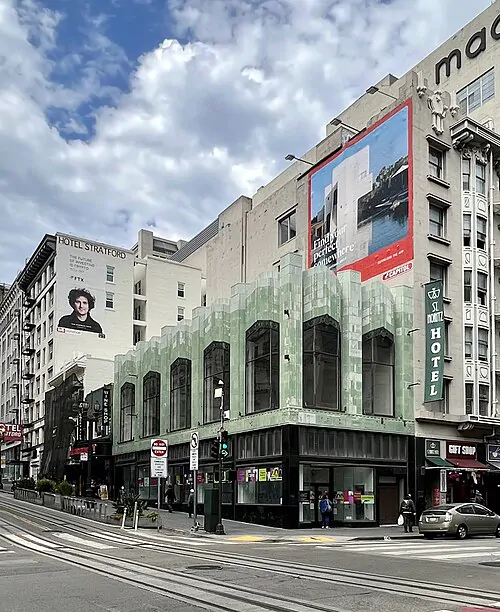
On the left at the stairs’ foot lay the Rubaiyat Lounge—velvet banquettes under dim Persian lamps, flanked by a polished chrome cash register. The main dining area unfolded in curtained nooks reminiscent of Arabian Nights tales, adorned with wall hangings and Omar Khayyam quatrains. Mardikian customarily broke warm flatbread with arriving diners as a gesture of Armenian hospitality, weaving folk stories to pitch menu specials.
The fare felt exotic then: Armenian, Middle Eastern, and African dishes tailored for American tastes, from shish kebab and pilaf to yogurt-drizzled boregs. Mardikian championed his house-made yogurt’s health virtues novel to U.S. palates alongside hearty lamb stews and dolma. A 1980 fire ultimately claimed the beloved venue.
Later Years and Enduring Legacy
Died age 73, Mardikian rests in Fresno’s Ararat Cemetery near mother Haiganoush (d. 1936 pneumonia). Son Haig preserves wines. From Bayburt orphan to Powell Street potentate, he flavored America: shish kofta conquering skepticism, yogurt seeding health trends, pilaf feeding GIs and UN envoys. Amid Tamanian stone and Mesrobian Deco, Mardikian’s pots boiled diaspora defiance warrior lad grilling phoenix from ashes.