
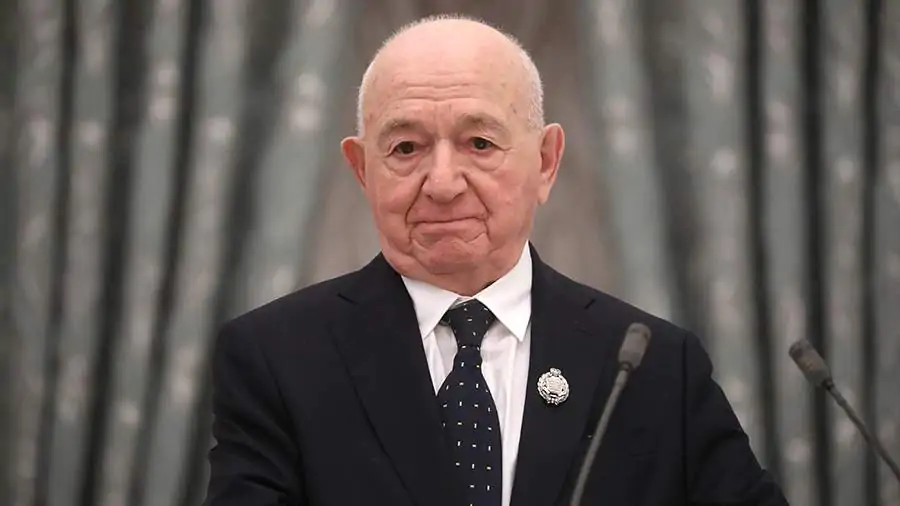
Nikita Pavlovich Simonyan (October 12, 1926, Armavir – November 23, 2025, Moscow), born Mkrtich, was a Soviet and Russian football icon of Armenian descent — a prolific striker, visionary coach, and administrator whose career defined eras in Spartak Moscow and Ararat Yerevan. As Olympic gold medalist (1956), four-time Soviet champion, and architect of Ararat’s historic 1973 double, he scored 133 goals for Spartak, becoming its all-time leader, and lived to 99 as the oldest Olympic champion.
Early Life and Football Awakening
Born in Armavir to an Armenian family with deep diaspora roots, Simonyan moved to Sukhumi, Abkhazia, as a child. A talented trumpeter in the school band, he earned pocket money playing at events for cinema trips. The 1930s film “Goalkeeper” ignited his football passion; he joined Dinamo Sukhumi youth, honing skills amid post-war hardship. In 1946, at 20, he relocated to Moscow, joining Krylya Sovetov amid family pressures—including his father’s arrest by Georgian authorities to lure him to Dinamo Tbilisi. Defiant, he stayed, forging his path.
Glory at Spartak Moscow: Striker Extraordinaire
Switching to Spartak in 1949 after Krylya Sovetov’s disbandment, Simonyan exploded: 26 goals in his debut season (top scorer), 34 the next—totaling 133 in 233 league games, Spartak’s record. He won Soviet Top League titles (1952, 1953, 1956, 1958) and Cups (1950, 1958). Even Vasily Stalin’s personal plane couldn’t poach him from Spartak, where he prized loyalty. Olympic gold in Melbourne (1956) capped his playing peak, starring for USSR.
Coaching Triumphs: Spartak and Ararat’s Golden Age
Retiring in 1959, Simonyan coached Spartak immediately, nurturing talents like Galimzyan Khusainov and Gennady Logofet. Despite a rocky 1960 (7th place), he secured league wins (1962, 1969) and Cups (1963, 1965, 1971)—though a 1965 scandal with Yuri Sevidov forced a brief exit. Returning in 1967, he rebuilt. In 1973, as an Armenian patriot, he led Ararat Yerevan to its sole Soviet double: league and cup triumphs over Dynamo Kyiv, etching national pride. Stints with USSR national team (1977–79), Chernomorets Odessa, and Ararat (1984–85) followed.
Administrative Legacy and RFU Leadership
Transitioning to administration, Simonyan shaped Soviet and Russian football as USSR team chief, Sports Committee deputy, and RFU first vice-president (1992–). In 2009, he served as acting RFU president post-Mutko. His influence bridged eras, mentoring generations and safeguarding Spartak-Ararat legacies amid USSR collapse.
Bonds with Russia

In Russia, Simonyan embodied the unbreakable spirit of Soviet sports, devoting over seven decades to its development as player, coach, and visionary leader. His unyielding loyalty to Spartak Moscow — the people’s club — made him a Muscovite icon, rejecting elite pressures even from Stalin’s inner circle. As RFU vice-president into his 90s, he guided post-Soviet transitions, advocating for youth academies and national team revival during turbulent 1990s and 2000s. Russian football federations and clubs honored him with lifetime achievements, crediting his tactical genius for shaping modern strategies. Tributes from Putin and Dyukov upon his passing hailed him as “Russia’s eternal captain,” a bridge between Soviet glory and contemporary triumphs like the 2018 World Cup hosting.
Personal Life, Honors, and Enduring Impact
Married with children, Simonyan embodied resilience—rejecting Stalin’s son, uplifting Armenian football via Ararat’s miracle. Honors: Honored Master of Sport, Olympic champion, multiple Soviet titles. Hospitalized November 20, 2025, he passed days after turning 99, mourned globally. Ararat hailed his “invaluable” Armenian contributions; Spartak, his eternal scoring throne. Buried honoring his dual heritage, Simonyan’s life—from Sukhumi pitches to Yerevan glory—inspires as football’s bridge between nations.
Armenian Pride in Soviet Sports Pantheon
For Armenia, Simonyan symbolized diaspora success: Armavir-born, Sukhumi-raised, Moscow-conquering, Yerevan-exalting. His 1973 Ararat feat remains folklore, proving Armenian grit in Soviet dominance. Tributes from FFA and global media affirm: at 99, he was football’s living legend, outlasting empires.
