
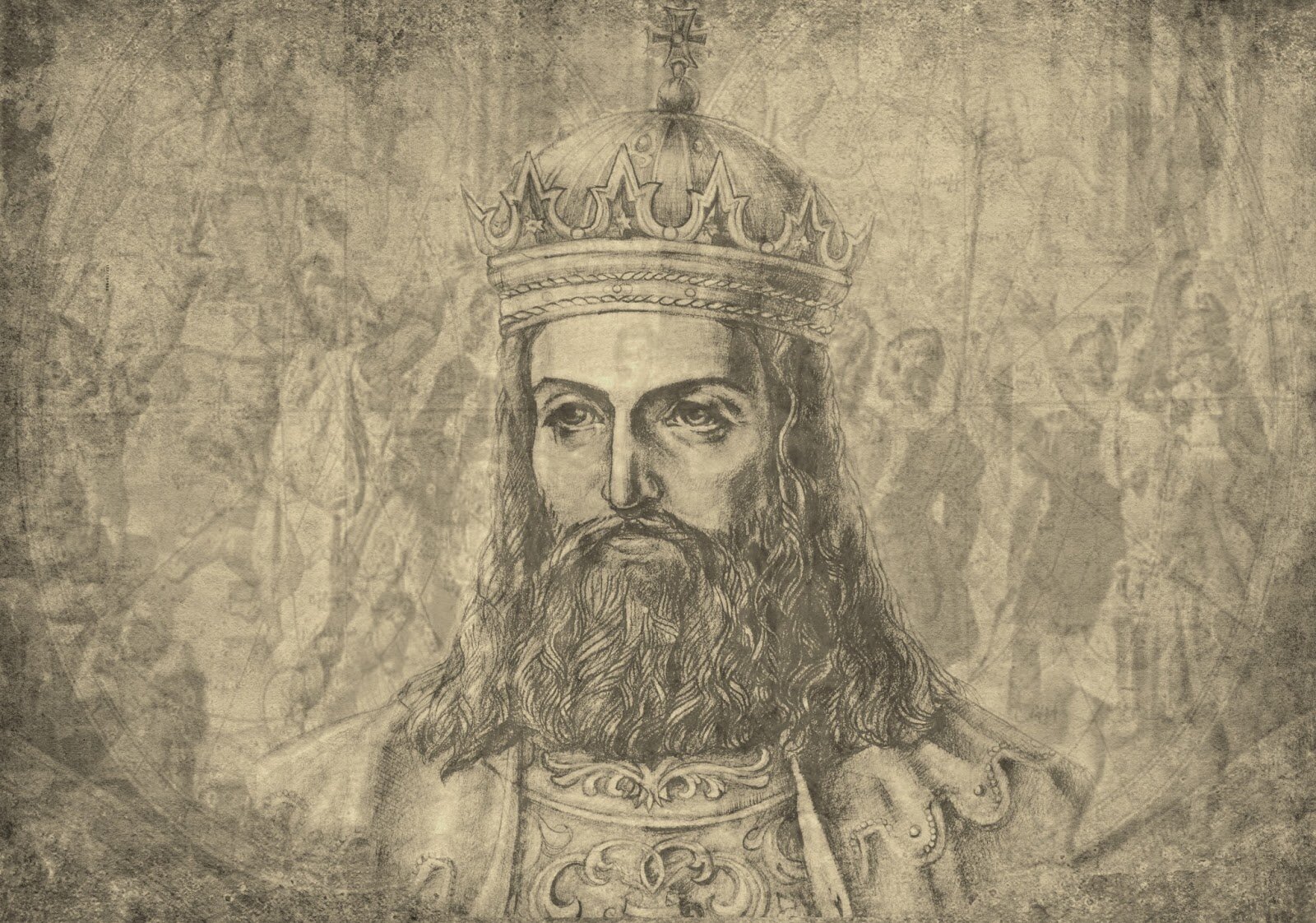
The name of King Tiridates III in Armenian historical and cultural tradition is inseparably connected with Armenia’s adoption of Christianity in the year 301 and with the figure of its first baptizer, Gregory the Illuminator. At the same time, the baptism of the kingdom and the personality of its first Catholicos overshadow the figure of Tiridates himself, placing him in a somewhat subordinate, “auxiliary” role. According to the author of this article, the historian Anton Evstratov, this position is easy to explain, since all historical sources describing the events of that time were created by Christian monks—the only intelligentsia of the Middle Ages. The inhabitants of monasteries could not help but emphasize the activities of the clergy and spiritual authority, which in their eyes undoubtedly prevailed over secular power.

What is the connection between Tiridates, Gregory the Illuminator, and the chronicler Agathangelos?
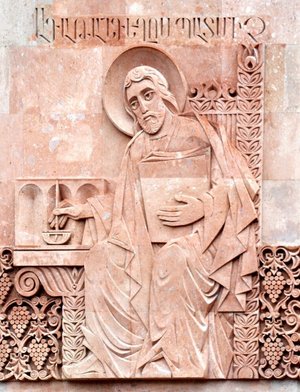
The most valuable work and virtually the only genuine source on the time of King Tiridates in Armenian historiography is the “History of the Conversion of the Armenians to Christianity”, attributed to Agathangelos. Other medieval authors, in essence, merely compiled and reworked Agathangelos’ text.
Agathangelos was long believed (and called himself) to be the secretary of Tiridates III. However, modern scholarship has established that he lived at the end of the fifth century—about one hundred years after the events described in his work. By that time, a kind of hagiography had already formed around the name of King Tiridates, and the events of his reign had become overgrown with religious legends inseparably connected with the new Christian faith.
Thus, in Agathangelos and his followers, it is Gregory the Illuminator who is given the exclusive and primary role in the baptism of Greater Armenia, while King Tiridates III appears to perform a subordinate function, perhaps even unwillingly, frightened by divine signs and the prospect of God’s punishment. And yet, political power belonged to Tiridates. It is obvious that the decisive will to baptize Armenia, to create a local Church, and even to “remember” Gregory the Illuminator—who had already been in the pit of Khor Virap for thirteen years at that point—belonged precisely to him.
Assessments of this event vary—both among scholars and within educated society. Some consider the baptism of Armenia and the deeds of Tiridates to be outstanding and uniquely correct, perhaps the best thing that ever happened to the country and Armenian civilization. Others see what happened as a conspiracy of the nakharars (the Armenian nobility, some of whom had already adopted Christianity) and Gregory the Illuminator, who deceived a brave and educated, yet trusting and simple-hearted king. In their view, this ultimately led, in strategic terms, to the loss of Armenia’s independence and to the division of its territory between Persia and Rome. Be that as it may, responsibility for Armenia’s historical choice, for its path, and in a sense even for the present condition of the Armenian state and the Armenian people, lies with King Tiridates III.
Tiridates, son of King Khosrov killed by the Parthian Anak and Gregory, son of the Parthian Anak, who killed King Khosrov
The king belonged to the Armenian branch of the Parthian Arsacid (Arshakuni) dynasty. Other branches of this dynasty ruled in Persia, India, and Maskut (the Caspian region of present-day Dagestan). His father was the great ruler and military commander Khosrov II, whose political and military activity made neighboring Persia tremble. At that time, a dynastic change occurred in Persia: the Arsacids were overthrown and Ardashir, the first ruler of the Sasanian dynasty, ascended the throne. This worsened relations with Armenia, whose king Khosrov sought to avenge the humiliation of his Persian relatives.
For eleven years, the Armenian army attacked Persia annually, routing its forces and even driving King Ardashir himself into flight. In desperation, Ardashir convened a council of military leaders, provincial governors, and tribal chiefs and announced a reward for anyone who could “avenge” him on the Armenian king. A Parthian named Anak responded, promising to eliminate Khosrov. In return, Ardashir pledged to crown him, make him second only to himself, and grant him Parthian lands.
Anak arrived in Armenia with relatives who were also his accomplices, posing as survivors of a Parthian clan destroyed by the Sasanians. They were warmly received by Khosrov, and Anak was elevated to the highest position—ironically, to that of “second after the king.” Several months later, however, he and his brother murdered the Armenian ruler in the capital, Vagharshapat. The assassins were immediately caught by Khosrov’s attendants and thrown into the river from a bridge. Later, the entire family of Anak was exterminated. This took place in the year 252.
Khosrov left only one heir, his infant son Tiridates III, who immediately faced mortal danger. Taking advantage of the situation, the Persian king launched an invasion, occupying Armenian lands, devastating them, and carrying off the population into captivity. Even the allied Roman army was defeated and driven out of Armenia. The young prince was saved by his nurses, who secretly transported him to Greece, then part of the Roman Empire. The infant son of the assassin Anak Gregory was also saved and taken to Asia Minor by his own nurses.
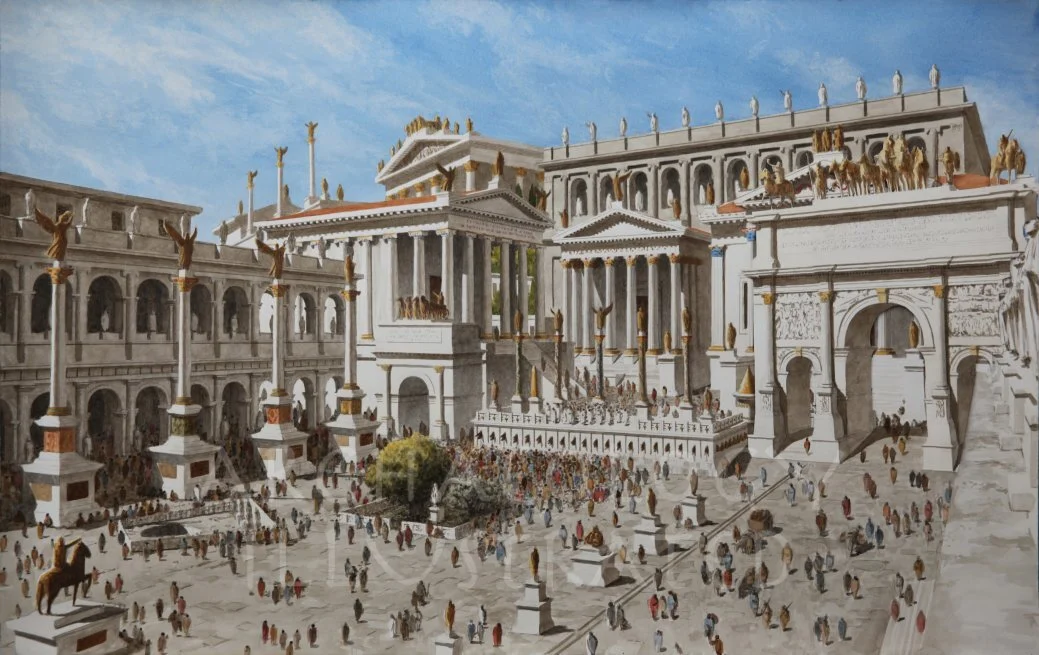
Tiridates spent his childhood and youth in exile, serving and being educated at the court of the nobleman Licinius in Greece. He received an excellent education for his time, was well versed in philosophy, and achieved great success in sports—being an outstanding wrestler, he even won the Olympic Games. Tiridates was deliberately prepared for his return to Armenia and to the throne of his ancestors. For this, he had to become a truly great warrior, equally skilled with both sword and pen. In Greece, he began forming a kind of “government in exile”—a circle of close associates on whom he would rely in his future campaign to Armenia and who, evidently, hoped to obtain key positions at his court. Among this circle was Gregory, the same son of the assassin Anak, who arrived at Tiridates’ court from Caesarea in Cappadocia. Neither the prince nor his companions knew his origin, but soon it became clear that the young man was a follower of the rapidly spreading Christian sect, whose teachings he had learned in Cappadocia. Tiridates regarded Christianity as a serious threat to state order, traditional life, and the established norms of the ancient world. Through threats and sometimes real pressure, the prince tried to persuade Gregory to renounce his faith. Thus, a deadlock arose: Gregory could not renounce Christianity, and Tiridates could not do without Gregory, who had already shown himself to be a talented and promising military commander.
How Tiridates deceived the leader of the Goths
Tiridates’ “finest hour” came during a Gothic invasion of the Roman Empire. The main blow fell on Greek lands, where the imperial army confronted the invaders. The Gothic leader proposed settling the conflict through single combat. The situation for the Romans was extremely dangerous: their leader was physically weak, and the army was unprepared for a large-scale battle. At that very time, the detachment of Licinius, Tiridates’ patron, was approaching. Near one city, they discovered that they lacked fodder for their horses, which was located on the other side of the city wall. Tiridates climbed the fortifications, entered the city, and threw several bundles of hay over the wall. Licinius was astonished by the Armenian prince’s strength and later presented him to the emperor. A daring plan was conceived. The next morning, Tiridates was dressed in imperial garments and, posing as the Roman emperor, entered combat with the Gothic leader. He defeated him quickly and brought the humiliated enemy to the Roman camp. The Goths retreated. The success was so overwhelming that Tiridates was ceremonially proclaimed king, receiving imperial insignia and full political support from Rome, as well as auxiliary troops to reclaim the Armenian throne.
The theological dispute between Tiridates and Gregory
Soon the army of Tiridates entered Armenia and defeated the Persian occupying forces. The victory was to be celebrated in the village of Eriza with sacrifices to the goddess Anahit. Gregory was ordered to place a wreath before the statue of the goddess. He refused, which led to a new conflict between him and the king.
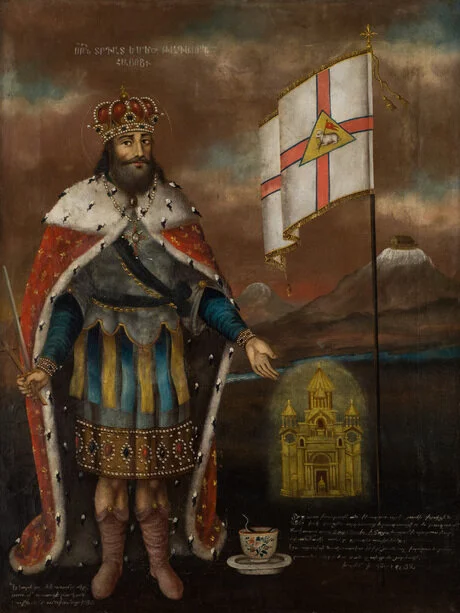
The king could not understand why this colleague, who was worthy of him in all respects, believing in his god, could not also believe in others. The concept of monotheism and adherence to one deity brought up in the spirit of Hellenism and ancient philosophy Trdatu could hardly have been close at that time.
“Reverence and service to God should not be conceded to anyone. For He alone is the creator of heaven and the angels who glorify His greatness, and of the earth and the people He created, who are obliged to worship Him and do his will; He is the creator of everything in the sea and on land,” Gregory insisted.
Annoyed and angry, the king announced that all the merits of his companion before him were no longer valid, and instead of honors and glory, he would receive humiliation, prison, torment and death.
“I was hoping for a reward not from you, but from the Creator, whose creatures are all visible and invisible creatures,” Gregory replied.
To say such a thing to an absolute monarch undoubtedly required tremendous courage, and could not but elicit a response in the form of all the above-promised Trdatom. But the king restrained himself. He never gave up hope to convince his colleague, to give him the opportunity to avoid suffering.
“When you say, ‘I don’t expect anything from you and I won’t expect anything,’ I understand that you want to die, and immediately, in the grave where those first dead lie, where you will find retribution. Well, I’ll get you where you want to be as soon as possible. But show me who the Christ is, whom you call the creator, so that I may know who will reward your labors. Is he the overseer of the graves to whom you wish to go, or is he the one who will free you from your prison bonds?” the emperor asked.
Gregory told him that Christ is the Son of God, who has risen Himself and is able to resurrect others, the One on whom everyone’s reward depends according to his deeds, and added that the pagans, including the king himself, are “more stupid than an ox and an ass, because they did not recognize the Creator,” and their gods are silent objects.
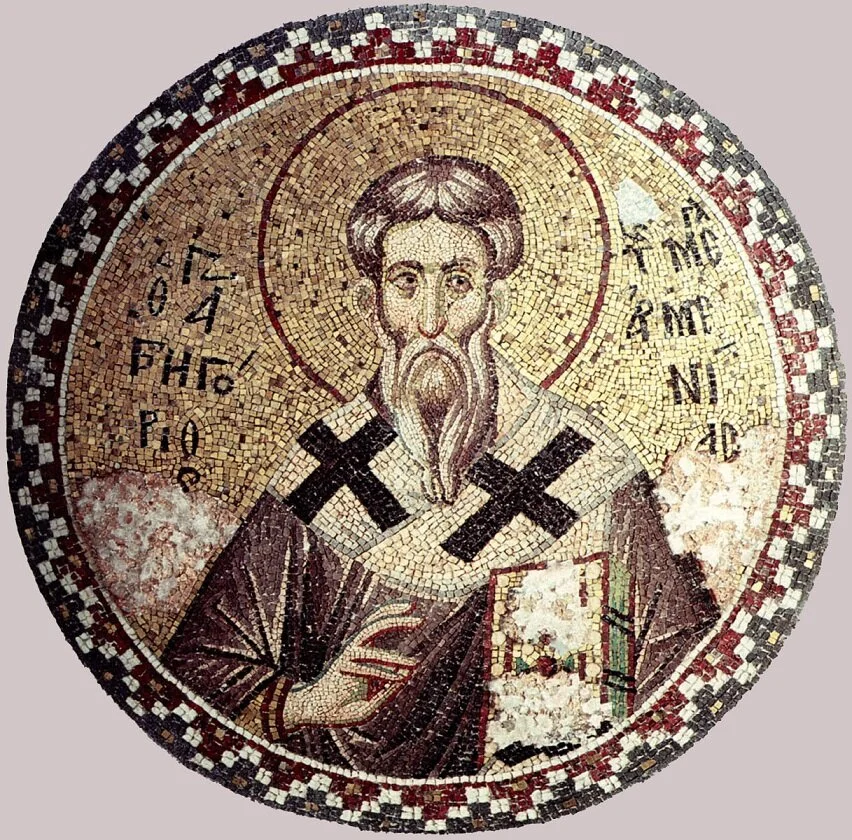
The tsar’s patience snapped, and this was the signal for the beginning of Gregory’s torment. His hands were tied behind his back, a huge salt slab was hung on his back, a chain was tied around his chest, and a rope was hooked around it. Trdata to the roof of the royal palace. They hung him by one leg and lit a bonfire from below so that the martyr could breathe smoke. They put leather bags with ashes on his head, and left him in this state for several days, and even forcibly made enemas with water through a special funnel, scraped the skin from the sides with iron blades and poured molten lead. Gregory did not stop reciting prayers to his God and calling on the tsar and his entourage to believe in him. Such steadfastness, and the very fact of the martyr’s survival, surprised me after all of the above. Trdata. Gregory always attributed this to the power that his God gives him. Finally Trdat, realizing that his prisoner himself longs for a quick death, decided to deprive him of this “pleasure” by putting him in a pit near the citadel of the city of Artashat, thus condemning him to a slow and painful death. The fate of the martyr was also aggravated by the fact that the tsar, at the suggestion of one of his nobles, finally found out that Gregory was the son of his father’s murderer.
Why was Tiridates so cruel?
Answering this question, it should first be noted that it is difficult to say for sure what kind of torments Gregory really suffered, and what the Christian church chronicler attributed to him. Agathangelos. In any case, it is obvious that he was punished, and the pit in which the future baptist of Armenia was for 13 years is still known — the monastery of Khor is now located there. Virap is one of the main Armenian sacred, historical and cultural centers. The causes of cruelty The tsar was concerned about the spread of a Christian sect, as it was then believed, whose adherents taught, as their contemporaries believed, not only to disobey pagan gods, but also the authorities who supported their cults, opposed rituals and customs that had not only religious, but also socio-political functions, rallying the population and giving he needs awareness of a certain community and identification. It is quite logical that the tsar perceived Christianity as an anti—systemic, anti-state, and therefore extremely dangerous paradigm of development, and sought in every possible way to prevent it. Neither Trdat nor other rulers of that time saw in the new religion the ideology on the basis of which it was possible to build a state, develop it and protect it from enemies, which Armenia always had in abundance. In addition, the young tsar was strongly influenced mentally by the ancient culture of the Roman Empire, in which, as is well known, the persecution of Christians was systematic. And in general, the concepts of humanism in ancient times were different than they are now. An important point here is the fact that Gregory concealed his origin, which, of course, could not but outrage the tsar, who lost his father and was forced to flee.

Putting Gregory in a pit, Trdat forgot about him, switching back to state affairs — especially since Armenia, supported by the Roman Empire, was permanently at war with Persia. The Tsarist army managed to win many great victories over the Persians, and Trdatu — to glorify his name, both as a warrior and as a commander. Rich booty flowed into the country. However, Persia was not the only enemy of the Armenian kingdom at that time — they also had to fight with the nomadic Huns, however, quite successfully.
In parallel, very remarkable political, ideological and social processes took place in Armenia, as well as throughout the ancient world. The fact is that the pagan religion, traditional for these spaces, has been in a state of crisis for many decades. Its ideological potential has been exhausted, and its sacredness has been lost. Religion in late ancient society increasingly turned into a poorly interconnected collection of individual traditions, holidays and rituals — more socio-cultural than directly religious. Society as a whole and its individual member in particular created a mental vacuum that needed to be filled. The population was filled in different ways — with ancient Eastern cults (for example, ancient Egyptian, which were very popular in Rome at one time), new or updated eastern systems (the most famous of which is the cult of Mithras, Mithraism) and, of course, Christianity, for which the current situation has become fertile ground. The teachings of Jesus Christ rapidly transformed from a marginal sect into a world religion, despite the opposition of the authorities and the brutal reprisals against their adherents. The number of Christians in Armenia was also growing, not only among the common population, which was initially targeted by the preaching of Christ, but also among the Nahar aristocrats. The Armenian society was changing rapidly, and during the 13 years of Grigory’s stay in the pit, the situation became qualitatively different.
Who helped Gregory survive in the pit, and why did the maiden Hripsime refuse both the emperor and the king?
However, things were not so bad for Gregory himself, who was supposed to be starved to death, but this did not happen. He was fed regularly (according to the data Agathangelos, this was done by a widow who lived nearby, dumping tortillas into a pit) and, apparently, was introduced to the news of the Armenian kingdom. And there was plenty of news.
A Christian community of virgins who fled the Roman Empire appeared in Armenia, one of whom, named Hripsime, the Roman emperor Diocletian, a well-known and, admittedly, fierce persecutor of Christians, chose himself as his wife. Unwilling to tie the knot with the emperor, the nun Hripsime, along with her religious sisters, disappeared outside the Roman possessions. The community led by the Abbess Gayane, settled in the capital of Armenia Vagharshapate earned her bread by selling the belongings of the maidens. In addition, one of the girls was able to create glass crafts, which also brought income to the common piggy bank. However, it must be said that fleeing from pagan Rome to pagan Armenia was not the best idea, especially considering the allied relations between the two countries and their rulers. Diocletian sent letters to neighboring states urging them to find the Christian women who had fled. I received such a letter and Trdat. Moreover, Diocletian wrote to him that he could keep the rest of the members of the community, and asked Hripsime to send them to Rome. However, the emperor noted that if Trdat will like the virgin himself, he can keep her for himself. The community was soon found. Beauty Hripsime amazed both the Armenian soldiers and the townspeople Vagharshapat, and then the king of Armenia himself, who decided to marry her — Diocletian’s reservation turned out to be useful.
It required “just a small thing” — the consent of the girl herself, who, having devoted herself to God, could not marry. Other members of the community and her mother superior also supported her in this. Gayane.
“Remember, my child, that you have forsaken, you have rejected the famous and magnificent throne of your homeland, the royal porphyry, and you have longed for the eternal shining light of the kingdom of Christ, Who is the Creator, Guardian and Renovator and preserves the promised incalculable benefits for those who trust in Him. And you, my child, who have neglected the purple of your transitory life, how can you now give the purity of your chastity to these dogs in a barbaric country?” she admonished her ward.
The tsar, however, was persistent — the girl was taken to the palace, settled in a special room, where he entered Trdat. When he tried to take her by force, he encountered unexpected resistance — this fragile hermit… overcame him, the hero and winner of the Olympic Games! Then the abbess was brought to the door of the room, who was forced to persuade Hripsime, but she, on the contrary, urged the ward to be faithful to her Christian obligations. Then they smashed her face with stones, knocked out her teeth and crushed her jaw. However, it didn’t hurt. Hripsime escape from the royal palace. They caught up with her not far from Artashat and, having subjected her to severe torments, tore her to pieces. Then other virgins from the community were brutally murdered.
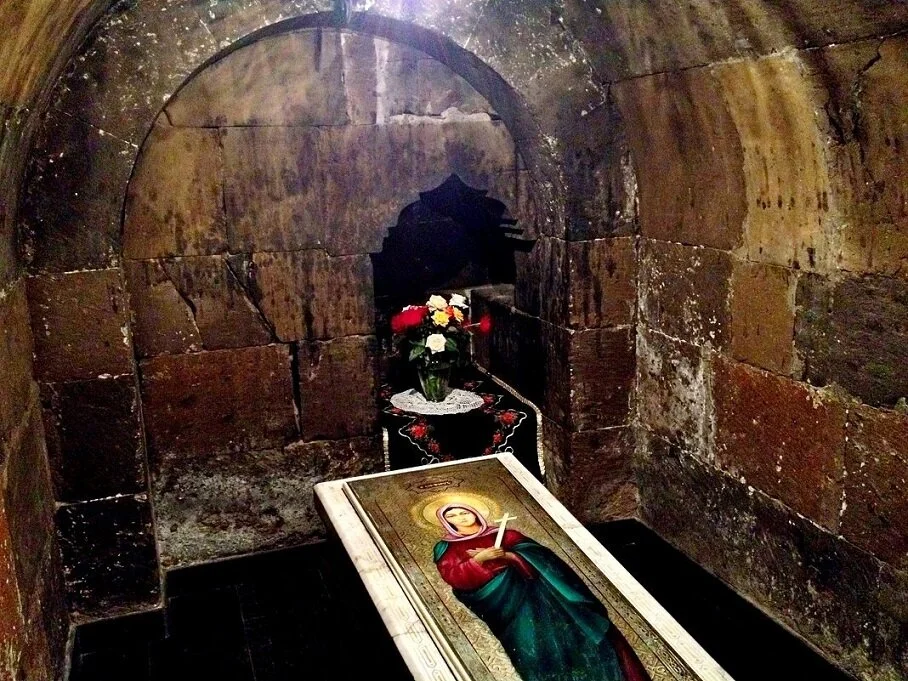
And after a few days of the tsar Trdat was struck by a strange disease — he fled into the forest and, like a wild boar, began to eat grass and roots. The courtiers and entourage did not know what to do, and then the sister of King Khosrovidukht declared that she had seen a dream calling for the release of Gregory, who was in the pit, and who alone could heal her brother. Few people in the palace remembered the prisoner, but they found him, lifted him out of the pit and asked for help.Gregory agreed, saying that he and his God forgive tormentors and persecutors, but they need to convert to Christianity. However, it was not without threats from the future saint.
“But if you do not want to listen to the preaching of the Word of Life, He will strike you with cruel blows of revenge and destroy you, and will judge you by the hands of strangers and enemies, and, having taken full revenge on you, will put you to death,” the former prisoner said.
It turned out that he knew about the situation in the country, what had happened to the Christian virgins from Rome, and much more. The tsar’s entourage had no choice but to agree to Gregory’s terms, who immediately launched active Christian propaganda, introducing the Armenians to the new teachings, and at the place of execution, the saint Gayane and her charges built the first chapel. The tsar was healed, and actively began the baptism of Great Armenia.
We will allow ourselves to doubt the story of the transformation of the king of Armenia into a boar, but we will express a timid suspicion of Grigory’s active communication with his sister. Trdata Khosrovidukht, who may have provided relatively “mild” conditions for the prisoner’s detention in the pit, as well as provided him with the necessary information about what was happening in the country. In many ways, most likely, it was thanks to his sister and the Naharar princes who had already (perhaps secretly) converted to Christianity, that the tsar, in the context of the paganism crisis, turned to Christianity. At the same time, he was allegedly “accidentally” reminded that it was Gregory who could help him with baptism. And after the latter received the title of Catholicos of Armenia and the necessary powers from the Metropolitan of Caesarea, it was he who became the main associate. The role of Trdat in the “re-education” of pagan Armenians.

This point of view is supported by the zeal shown by Trdat III spread Christianity, as well as his brilliant mastery of the new doctrine. He, a connoisseur of ancient philosophy, was finally able to find the threads that brought ancient society closer to the new religion, and therefore the most relevant ways of its mental and socio—political integration. Church construction and mass baptisms have begun across the country.
However, the connection with the old religious traditions had to be broken radically and forever. The tsar and Gregory traveled with an army through Armenia, destroying pagan temples on their way. We don’t know much about the resistance they faced, but the fact that the dismantling of religious buildings had to be carried out with the help of the army leads us to some disappointing thoughts. However, to attract Christianity, not only a stick was used, but also a “carrot” — new believers were released from debt obligations, released from prisons, and given gifts in every possible way.
For the new religion, it was necessary to create a solid institution of priests, in fact, a new estate, qualitatively different from the previous priesthood and opposed to it. Priests were recruited initially from two social groups — from marginals from the outskirts who had no ties to the former priests and cults (but were dependent on the tsar and Gregory for everything), and… from the children of those priests. Thus, on the one hand, the subordination of the new institution to the central government was ensured, and on the other, the prospects for the reproduction of paganism in the next generations were destroyed.
Armenia’s success in spreading Christianity could not but come to the attention of Rome, whose new emperor, Constantine, decided on similar reforms. He invited Trdata to his capital. Gregory arrived with the tsar and was introduced to the emperor. Constantine asked for the blessing of the Armenian high priest and, having received it, with great honors released the tsar and the Catholicos back to Armenia. After that, Gregory retired from church affairs, choosing a hermit’s life, but continued to influence the situation in the country through his son. Aristakes, who became the new Catholicos. The latter took part in the famous The Council of Nicaea in 325 was the first Ecumenical Council in the history of Christianity to adopt the Creed, 20 canons, and condemn the heresies that had begun to rise.
But he’s strong, willful, and popular with the people. Trdat was less and less needed by both the new Christian hierarchs and the Nahararian nobility. His desire to keep both the church and the territorial rulers under control clearly irritated both of them. Against A conspiracy was hatched by Trdat III, and in 330 the tsar was poisoned by its participants. His son Khosrau III had to pacify the rebellious nobility, who, I must say, coped with his task. However, these are the events and deeds of the following reigns, times and epochs. History Date III is over. He was undoubtedly an outstanding man who left behind a powerful state, a new ideology and a glorious memory. Being both mentally and chronologically a man of his time, the king of Great Armenia, however, moved it from antiquity to a new stage of development. In fact, after the baptism, this state entered its Middle Ages. However, having chosen for himself, by his efforts Trdat is a great warrior, philosopher and Olympic athlete, a Christian path of development Armenia is still following it.
Source: Armenian Museum of Moscow and the Culture of Nations
 armeniawiki