
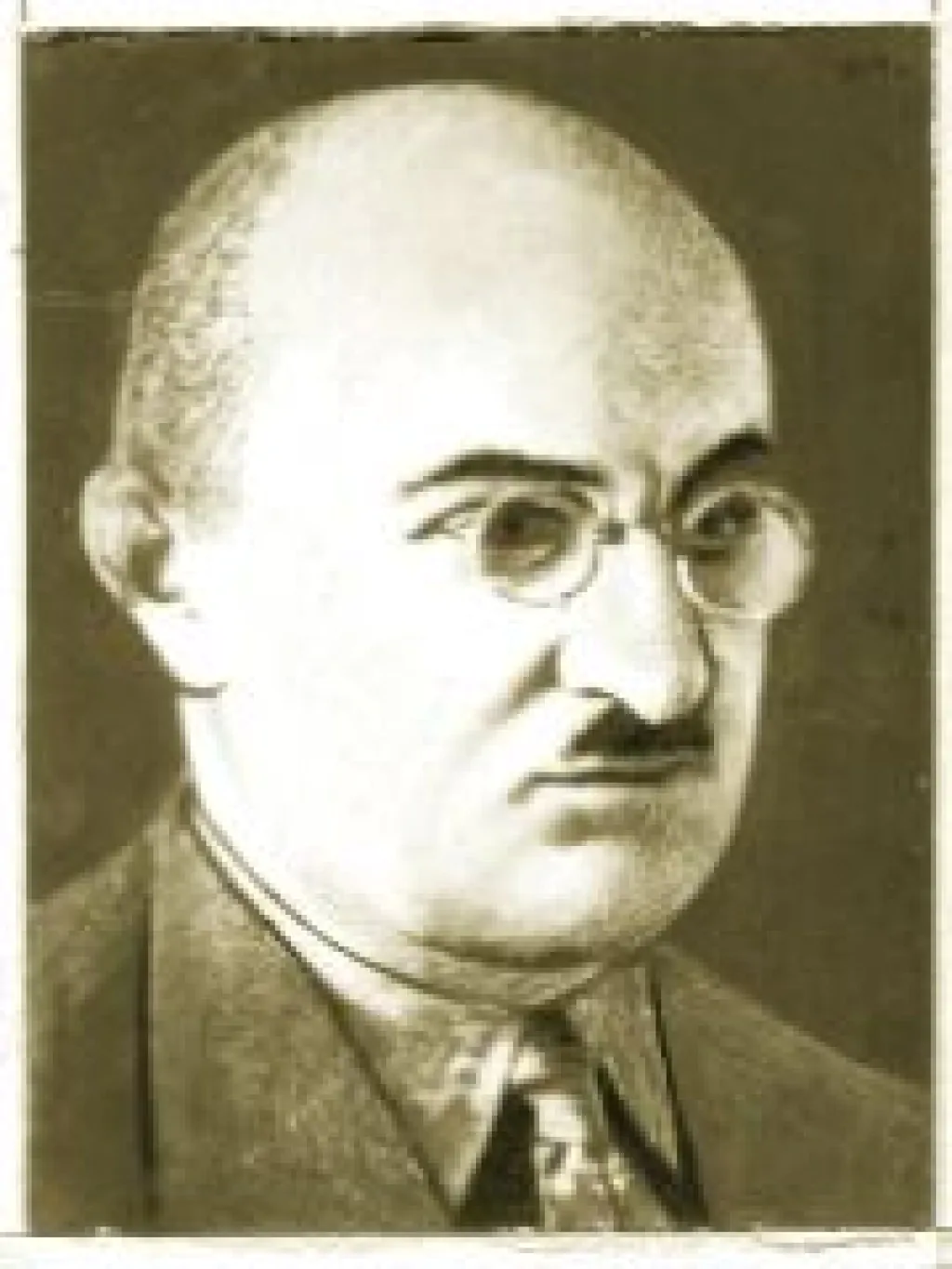
Askanaz Harutyuni Mravyan (Armenian: Ասքանազ Հարությունի Մռավյան; January 2, 1886 [O.S. December 21, 1885] – October 23, 1929) was a Soviet Armenian statesman, educator, and Bolshevik activist who shaped the nascent Armenian SSR’s political and cultural foundations.
Early Revolutionary Activity
Born in Elizavetpol (modern Ganja, Azerbaijan) to an Armenian family, Mravyan joined the Russian Social Democratic Labour Party in 1905, focusing on its Bolshevik faction across Yerevan, Tiflis, Baku, and Saint Petersburg. He graduated from the pedagogy faculty of Saint Petersburg’s Psychoneurological Institute in 1915. From 1915–1917, he edited Armenian-language Bolshevik newspapers Paykar (“Struggle”) and Banvori kriv (“Worker’s Battle”), amplifying revolutionary propaganda amid World War I.
In 1918, Mravyan became secretary of the Caucasian regional Bolshevik committee and editor of Kavkazskaya pravda (“Caucasian Pravda”). As a Central Committee member of the Communist Party of Armenia, he endorsed a covert September 1920 directive urging Armenian Bolsheviks to hasten the First Republic’s defeat in the Turkish-Armenian War and dismantle its army—actions pivotal to Soviet takeover.
Leadership in Soviet Armenia
Mravyan joined the six-man Revolutionary Committee (“Hayrevkom”) formed in Baku in November 1920, which seized control post-invasion. He succeeded Gevorg Alikhanyan as General Secretary (or First Secretary) of the Communist Party of Armenia’s Central Committee from May 1921 to January 1922, wielding substantial party authority distinct from government head Sargis Lukashin.
As People’s Commissar of Foreign Affairs (1921–1923), he signed the Treaty of Kars, formalizing the Turkish-Armenian border. From 1923 until his death, Mravyan served as People’s Commissar of Education and deputy chairman of the Council of People’s Commissars, editing Sovetakan Hayastan (“Soviet Armenia”). He drove literacy campaigns, cultural sovietization, and institutional reforms, though he rebuked figures like composer Romanos Melikyan for promoting “bourgeois” music.
Death and Legacy
Mravyan died in Yerevan on October 23, 1929, at age 43, his passing marking the end of Soviet Armenia’s founding Bolshevik cadre. A village in Aragatsotn Province bore his name (Mravyan, later Yeghipatrush) from 1945–1992, honoring his cultural commissar role.
In historiography, Mravyan embodies early Soviet Armenia’s blend of ideological zeal and realpolitik—from subversive wartime plotting to treaty diplomacy and education overhaul—amid the fragile transition from independence to Bolshevik consolidation.