

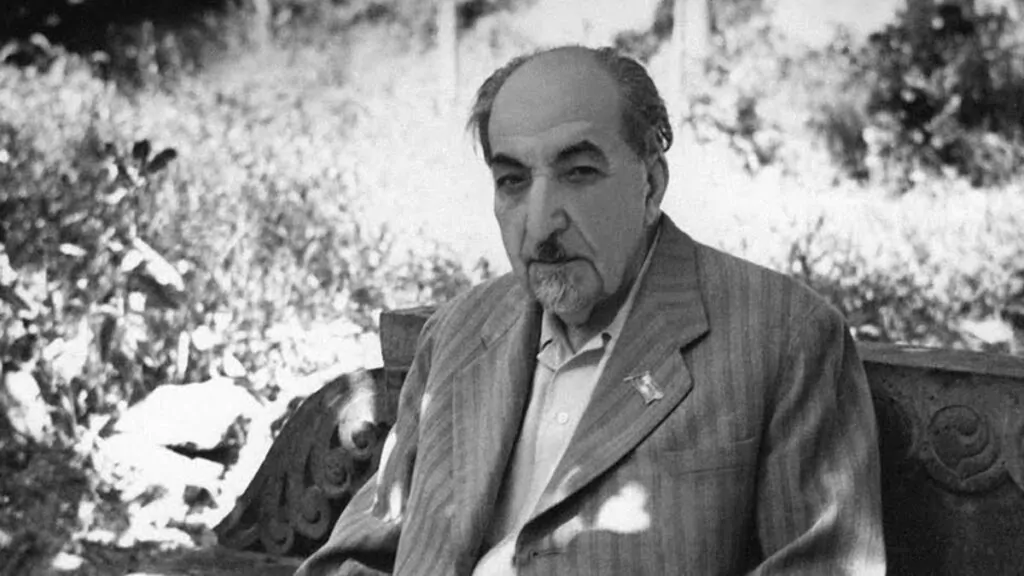
Avetik Sahaki Isahakyan (1875–1957) is one of the most celebrated Armenian poets, writers, and public activists whose life and work profoundly shaped Armenian literature and national consciousness. Known for his passionate lyricism and deep patriotism, Isahakyan’s poetry eloquently captures themes of love, exile, injustice, and the indomitable Armenian spirit. His career intersected with significant historical struggles, including political activism for Armenian liberation and the trauma of the Armenian Genocide, which deeply influenced his poetic voice.
Early Life and Education
Avetik Isahakyan was born on October 19 (31), 1875, in Kazarapat, near Alexandropol (modern-day Gyumri), Armenia. Raised amidst a culturally rich environment, he began formal education at the Gevorgyan Seminary in Etchmiadzin from 1889 to 1892. In 1893, he continued his studies at Leipzig University in Germany, focusing on literature and history of philosophy, broadening his intellectual horizon and exposure to European literary trends.
Political Engagement and Imprisonments
Isahakyan’s political awareness was awakened early, as he actively joined the Armenian Revolutionary Federation in Alexandropol, supporting Armenian resistance activities during turbulent times. Arrested in 1896 by Tsarist authorities due to his activism, he spent a year imprisoned in Yerevan and was arrested yet again in 1908, spending half a year in Tiflis’s Metekha Prison.
These experiences fueled his resolve and deepened the social commitment reflected in his poetry. He emigrated in 1911, settling in Europe where he remained active in representing Armenian causes, especially in Germany, while continuing to write and promote Armenian culture.
Literary Career and Major Works
Early Poetry and Themes
Isahakyan’s early poetry collections, such as Songs and Wounds (1897), gained immediate popularity for their lyrical beauty, emotional depth, and heartfelt patriotism. His compositions are infused with a poignant sense of sorrow, reflecting the harsh realities facing Armenians coupled with profound love for his motherland.
“The Songs of Haiduks”
Between 1899 and 1906, Isahakyan wrote The Songs of Haiduks, one of the earliest classical Armenian poetic works centered on the theme of the Armenian freedom struggle. This collection immortalizes the guerrilla fighters—haiduks—and evokes a spirit of resistance, heroism, and national pride.
Poetry of Loss and Hope
The Armenian Genocide (1915-1922) left an indelible mark on Isahakyan’s work. Poems like “Snow Has Covered Everything…” and “To Armenia…” mourn the devastation while expressing enduring hope for justice and rebirth. The trauma of loss and exile is a recurrent motif, alongside an unwavering belief in renewal.
Isahakyan’s writings often balance personal introspection with collective memory, offering both lament and inspiration. His poems touch on universal themes such as love, nature, beauty, and the passage of time, making his work timeless.
Cultural and Political Influence
Isahakyan’s significance extends beyond literature into public life. A prominent member of the Armenian Academy of Sciences, he received scholarly recognition and became a voice for Armenian intellectuals during political upheavals and diaspora dispersal. His works continue to inspire Armenians worldwide, symbolizing resilience, cultural pride, and the quest for freedom.
Legacy and Remembrance
Avetik Isahakyan’s legacy endures in many forms:
- His image is honored on Armenian currency, murals, statues (notably a prominent one in Yerevan), and in educational curricula.
- The Avetik Isahakyan House Museum in Yerevan preserves his memory and invites reflection on his poetic and political contributions.
- His poetry remains a staple in Armenian literature, celebrated for its emotional power, spiritual insight, and national significance.

Conclusion
Avetik Isahakyan’s life and work epitomize the complex interplay of art and activism, personal and national identity. Through lyrical mastery, he gave voice to the hopes, sorrows, and enduring spirit of the Armenian people. As poet, patriot, and public figure, Isahakyan’s contributions continue to resonate powerfully within Armenian culture and beyond.