

Yeranui Aslazamyan, Ara Bekaryan, Mher Abeghyan – what unites these three Armenian artists of the 20th century? They all wrote about Armenia. However, the motherland, with its violent temperament, appears in a special way – in a new geometrized form. The scandalous Jack of Diamonds association had an impact on the work of the painters and how they managed to rethink the tradition of Paul Cezanne, says art critic Ruzanna Lazaryan.
It is interesting to observe how any artistic direction affects different nations. It is a synthesis of a new ideology and national character. So it is with the followers of Paul Cezanne, all those artists who were influenced by his work are distinguished by their worldview: these are the expressive Spaniard Pablo Picasso, the Russian rebels Ilya Mashkov and Peter Konchalovsky, the aesthete Henri Matisse and others.
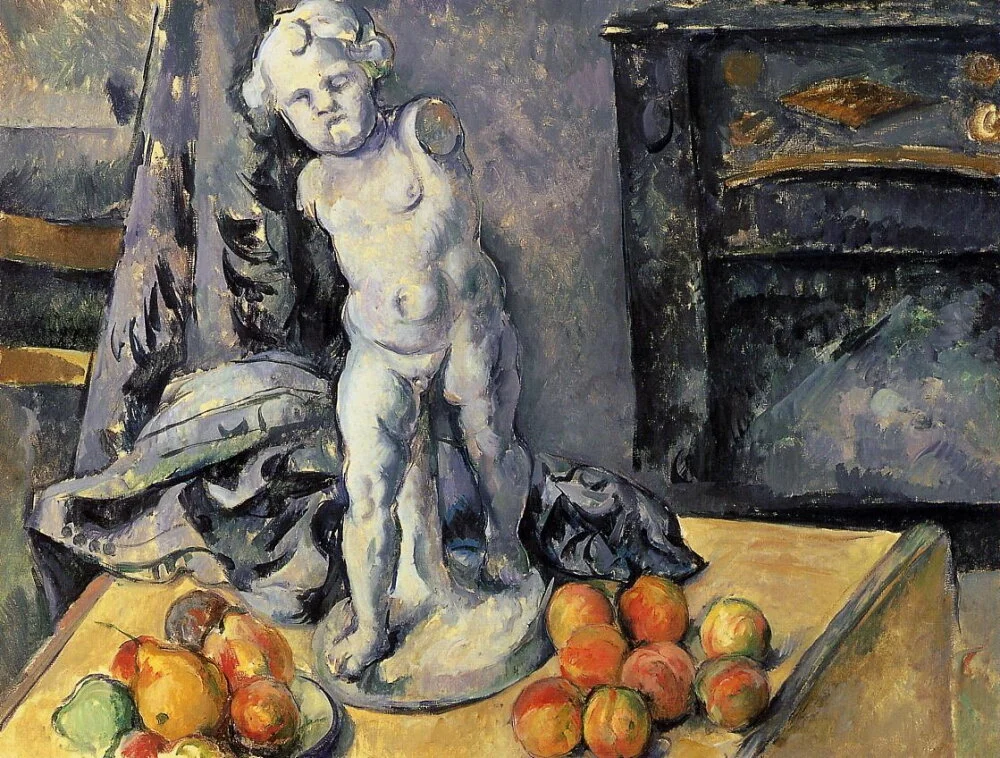
Paul Cezanne. Still life with a plaster Cupid, 1895. From the collection of the National Museum of Sweden
Cezanne – the knowledge of nature through geometry
Cezanne’s influence on the art world is simply undeniable. At the same time, his contemporaries, including his best friend Emile Zola, did not even suspect the impending worldwide success. During his lifetime, the artist was not understood by the elite, and the Academy did not pay attention to his work at all, considering the painter’s light, relaxed style rebellious; at exhibitions, his works were criticized in such a way that they even advised pregnant women not to look at them in order to avoid a negative impact on the baby. It was in this atmosphere, where the authority of classicism was still preserved and what the romanticism of Eugene Delacroix and the realism of Gustave Courbet were trying to combat, that Paul Cezanne, like a hermit, was engaged in serious reflections on art.
A connoisseur of the works of Immanuel Kant and Arthur Schopenhauer, Paul Cezanne looked at art and its goals through the prism of philosophy. This is Kant’s “thing–in-itself,” which is impossible to understand and which the curious human mind is so eager for. Thus, Cezanne’s desire for simplification and geometrization speaks precisely about the desire to reveal the “thing in itself.” While other artists, mostly Impressionists, displayed on their canvases the exterior of things in the form of chaotic brushstrokes and colors, which are only “phenomena” of the objective world, Cezanne paid special attention to the inner unknowable side of objects, which in the future led to Cubist dismemberment and intersubjectivity.
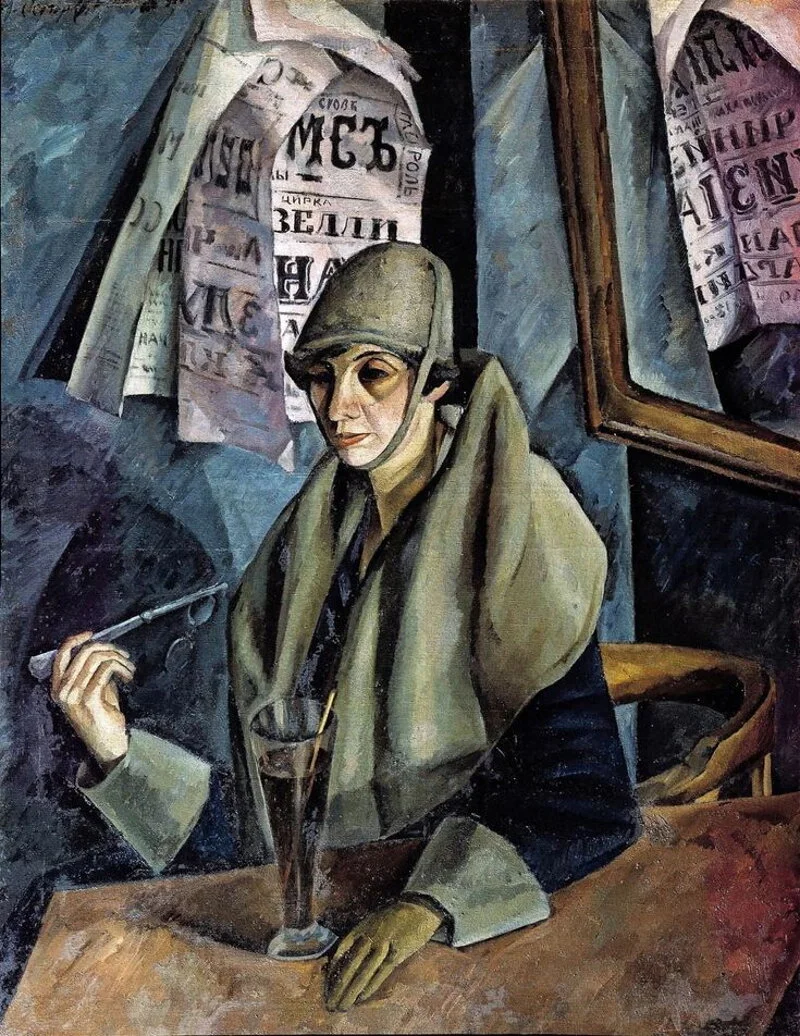
Thus, despite the fact that Cezanne never had students, after his death he became a true mentor, an inspiration to many creative personalities. In Russia, the participants of the provocative Jack of Diamonds association became the bearers of his ideas. These artists opposed the literary layers of art, its narrative side, advocating a pure understanding of painting that would be understandable to the people. In Russia, representatives of this movement, in addition to Cezanne geometrization, are characterized by a strong folk spirit, which is attractive precisely in its simplicity. In creativity, this manifests itself in the form of bright, pure colors, ordinary subjects and sincerity.
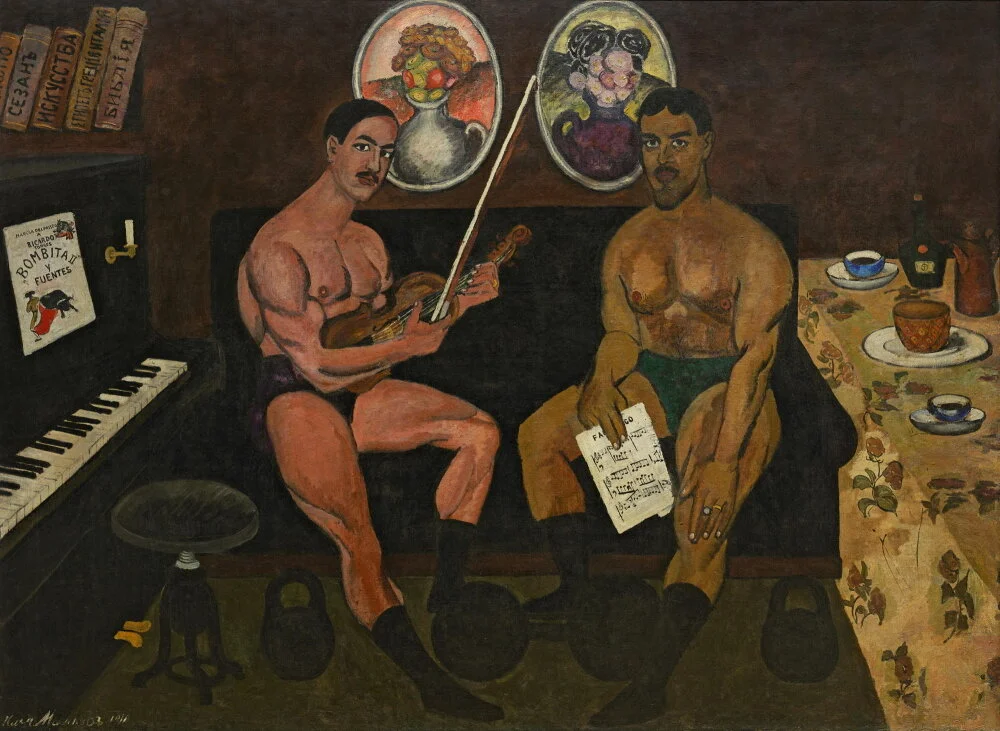
Aestheticism in a simplified form is how the works of the Jack of Diamonds can be briefly described. Just as Cezanne was once against impressionistic superficiality, so the Russian Cezannists were against the local realistic and impressionistic traditions. To prove the truth of these arguments, it is worth taking a closer look at Mashkov’s work “Self-Portrait and Portrait of Pyotr Konchalovsky”, where the artist presents himself and his friend not as intellectual thinkers, as the artist’s image was seen before, but as ordinary people who can, among other things, play sports, play the violin and generally have many different interests without being a privileged part of society. In the upper–left corner, you can see books that already clearly indicate the interests of the characters – Cezanne, Art, Egypt, Greece, Italy, and the Bible.
Armenian followers of the Cezanne tradition
The history of the emergence of Cezannism in Armenia is interesting. Besides the fact that many artists were simply fascinated by the work of the French master, for example, the younger generation of Armenians in France, there were also those who were honored to study with the Russian Cezanne painter Alexander Osmerkin, who taught at the Leningrad Academy of Arts. Such personalities as Mher Abeghyan, Yeranui Aslamazyan, Ara Bekaryan and many others became his students.
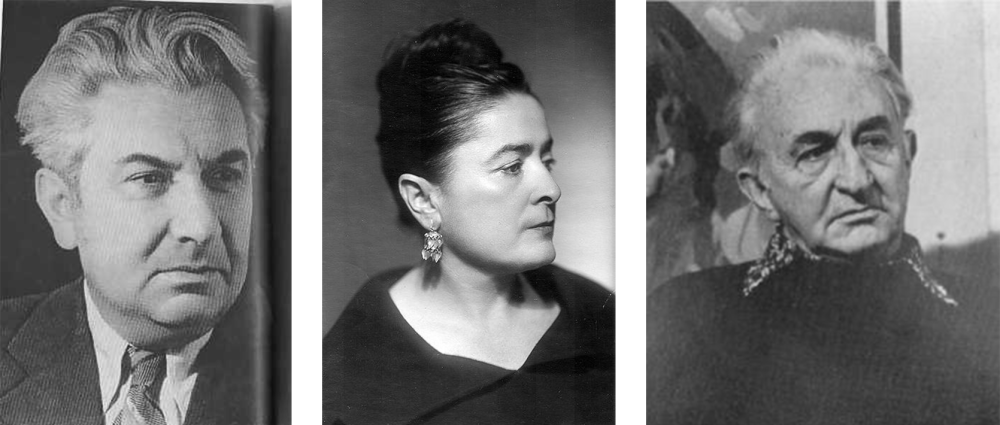
Mher Abeghyan – the artist in whose works the Armenian history has reached its final understanding. Mher’s father was Manuk Abeghyan, a famous Armenian philologist, which already speaks to the highly intellectual atmosphere in which the future artist grew up. In his work, Mher Abeghyan synthesizes Saryan’s empathy, love for nature, especially for his homeland, and a geometric understanding of things inherited from Alexander Osmerkin. The artist discards all that is superfluous in the objects, leaving only the essential, which expresses the essence of the thing to the maximum. Abeghyan’s works continue the Cezanne tradition: the objects are presented weightily, massively, as if breathing health. On his canvases, any piece of nature – mountain ranges, fields or ripe fruits – looks monumental. The compositional closeness to the teacher is especially noticeable in still lifes. It is also impossible not to take into account the impact of Martiros Saryan’s work. It is an immense admiration for one’s homeland and an attempt to convey in the most limited possible forms all the most important, essential things that are at its core.
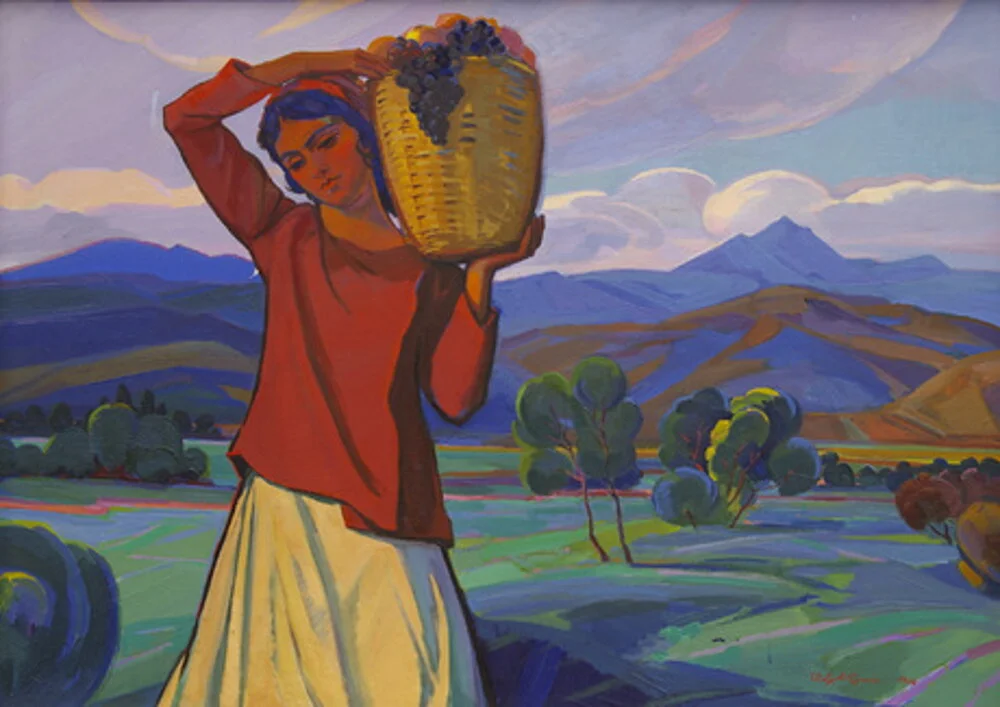
Yeranui Aslamazyan, a year younger than Mher Abeghyan, was born in Kars. In 1918, after the transfer of the Kara region to the Turks after the First World War, the family moved to Alexandrapol (Gyumri). Yeranui and her sister Mariam were interested in drawing from an early age, and the educated family did not limit the capable girls in anything and only encouraged their activities. Especially Vardui’s mother, who saw this as a chance for her children to emancipate themselves and assert themselves in a patriarchal society. The sisters first studied with such prominent Armenian masters as Sedrak Arakelyan and Stepan Aghajanyan, and then both moved to Russia and continued their education at the Leningrad Academy of Arts. It became the meeting place of Alexander Osmerkin and Yeranui Aslamazyan, who was able to synthesize Russian academicism with Armenian decorativeness. Unlike Abeghyan, Aslamazyan, as a woman, pays great attention to the aesthetic side of things.: These are the rich patterns and colorfulness that are inherent in the Armenian culture. And despite Cezanne’s concreteness, simplistic, feminine nature still strives for sophistication and sophistication.

Ara Bekaryan, the youngest of the three artists, was born in 1913 into the family of a mathematician who received his education at the Sorbonne. After the Genocide, the family moved from place to place, which interrupted the stable education of the boy. But eventually, in 1924, the Bekaryans found their home in Soviet Armenia. Ara first studied with Armenian masters, and then at the Leningrad Academy of Arts. After graduating from the academy in 1939, the painter went to the front, participated in the Great Patriotic War. The main theme of the painter’s work is the village and its unique atmosphere. The portraits on his canvases are conventional: it is not the individuality that comes first, but the general collective image of the Armenian people. And for the implementation of the latter, the Cezanne ordering of forms played an important role.
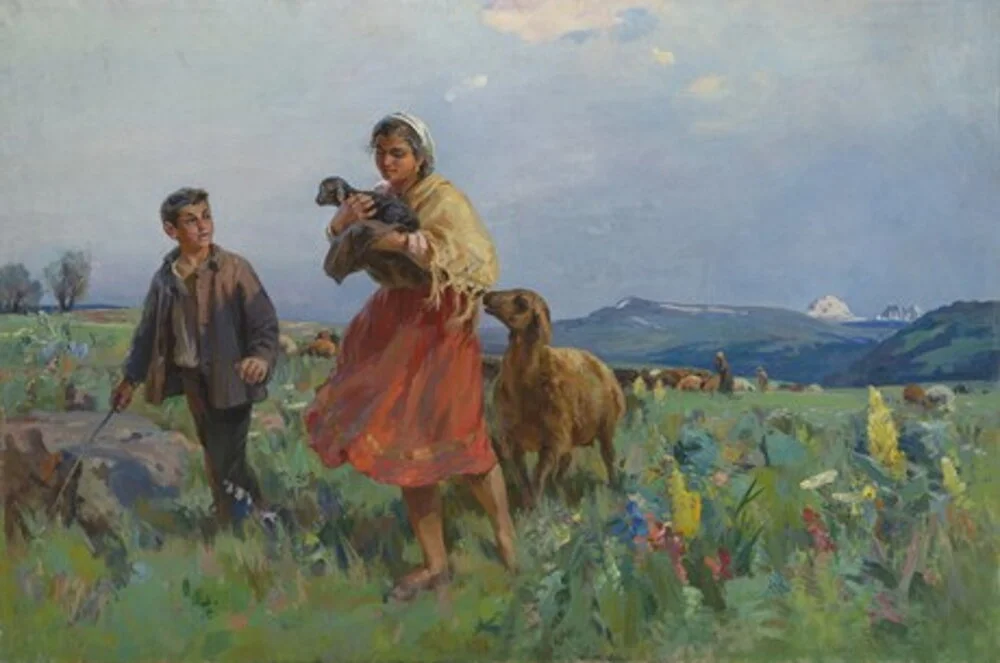
Thus, despite the Western trends and the undeniable popularity of Cezanne and his work, it was perceived in completely different ways in different cultures. In the case of Armenia, Cezanne became a wonderful way for artists to create a collective image of their homeland. The warm climate and violent temperament of the Armenians contributed not only to the philosophical disclosure of the subject, but also to its emotional understanding, where any image is not reduced to geometric shapes, as Cezanne said, but pulsating life was felt in it, because every piece of nature carries all its power.
Source: Armenian Museum of Moscow and Culture of Nations
 armeniawiki