
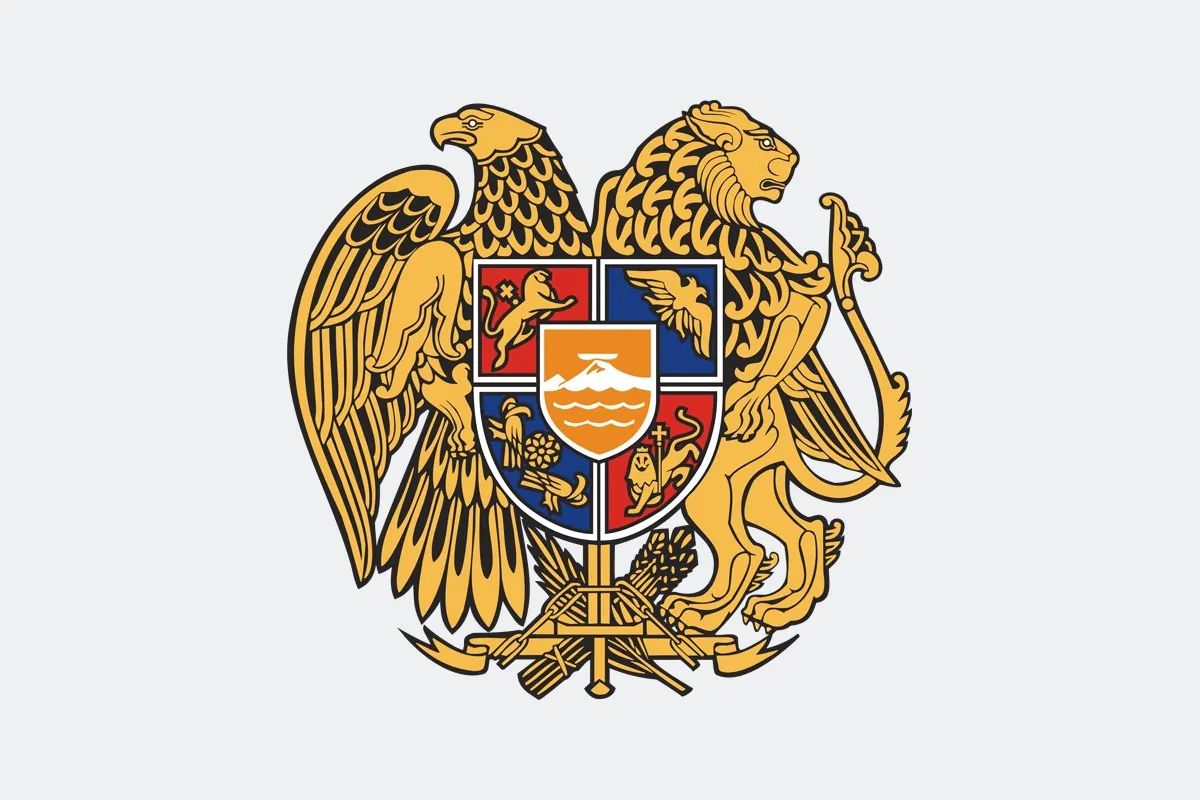
The Coat of Arms of Armenia is one of the most important national symbols, a multi-layered symbol reflecting the thousand-year history, culture, religion and spiritual values of the Armenian people. Its elements are filled with meaning and are associated with a rich heritage, as well as with historical events that formed the national identity.
Historical perspective of the coat of arms
The historical prototypes of Armenian coats of arms can be traced back to the 13th-14th centuries, when images of lions, eagles and other symbols of power appeared on the coats of arms of Armenian principalities and kingdoms. In the 16th-17th centuries, coats of arms with winged angels, crosses and ornaments symbolizing religious and state dignity were used in Armenian kingdoms.
During the Soviet period, Armenian symbols were limited, but with the return of independence in 1991, there was a need to create a unique state emblem that would combine historical traditions with modern ideas.
The first official coat of arms of independent Armenia was approved in 1992 and has undergone some changes since then, but the main elements have been preserved, emphasizing the continuity of traditions.
Main elements of the coat of arms
The modern Armenian coat of arms consists of the following elements:
1. Shield
The shield is the central part of the coat of arms, divided into four segments. Each segment contains important symbols:
In the center is Mount Ararat, the symbol of the Armenian nation. On its top is Noah’s Ark, since according to one tradition, the ark remained on this mountain after the flood. The shield is divided into four sections, which symbolize the four independent Armenian kingdoms in the history of Armenia: top left – Bagratids, top right – Arshakids, bottom left – Artashesids, bottom right – Rubenids.
2. Ararat Mountains
The central element of the coat of arms is the image of the legendary Mount Ararat, which occupies a special place in Armenian culture and religion. In the Bible, Ararat is considered the place where Noah’s Ark came to rest after the flood. In the coat of arms, it is depicted with a snow-white peak, symbolizing purity and eternity.
3. Winged figures and angels
The coat of arms features stylized winged figures or angels guarding the coat of arms. They symbolize divine protection, spiritual strength and higher values.
4. Laurel wreath and other plant symbols
The laurel wreath is a traditional symbol of victory, glory and dignity. Grape vines and ears of grain are a symbol of wealth, fertility and the cultural traditions of winemaking and agriculture.
5. Ancient Armenian ornaments and crosses
The coat of arms uses stylized crosses and ornaments reflecting the Christian heritage of Armenia, which was the first country to adopt Christianity as a state religion (in 301).
6. Additional elements .
The broken chain signifies freedom and independence, the sword – the power and strength of the nation, the ears of wheat – the hard-working nature of Armenians, the branch – the intellectual and cultural heritage of the Armenian people. The tricolor ribbon signifies the flag of Armenia.
Symbolism of color
The main color of the coat of arms is gold, the colors of the kingdoms of historical Armenia: top left – red, top right – blue, bottom left – blue, bottom right – red, and Mount Ararat depicted in the center of the shield is orange.
Meaning of the coat of arms
The Armenian coat of arms is not only a state symbol, but also a living reminder of the rich history, spiritual values, and national pride of the Armenian people. It unites different eras and cultural layers, reflecting the eternal connection of Armenians with their land, religion, and history.
The coat of arms serves as an inspiration for citizens, a symbol of unity and resilience in the face of trials and tribulations. It reminds of Armenia’s role as one of the world’s most ancient cultural civilizations and the need to preserve and develop its heritage.
Modern meaning
The coat of arms symbolizes national pride, historical continuity and spiritual unity of the Armenian people. It serves as a reminder of Armenia’s role as one of the oldest Christian countries in the world, its cultural heritage and resilience in difficult times.
The coat of arms also reflects the desire for peace, prosperity and development, uniting the people in the struggle to preserve national identity and sovereignty.